
And turning away from crime news now… our next story is about a new kind of non traditional media - a way to get the message, that takes the messenger - (folks like us) - out of the equation. They're podcasts and while they are very popular in developed countries, they are only just now catching on as a way to get fresh views and perspectives - in what the experts call - a dis-mediated space - that means you don't have to turn on your TV or your radio - or even facebook. All you need is an internet connection.
More and more Belizeans are joining in this new and uniquely creative way to express themselves directly and without going through any established media portal.
So whether the subject is climate change, Belizean history, or people that inspire you, there's a podcast for that. Courtney Menzies spoke with a few podcasters and has this story.
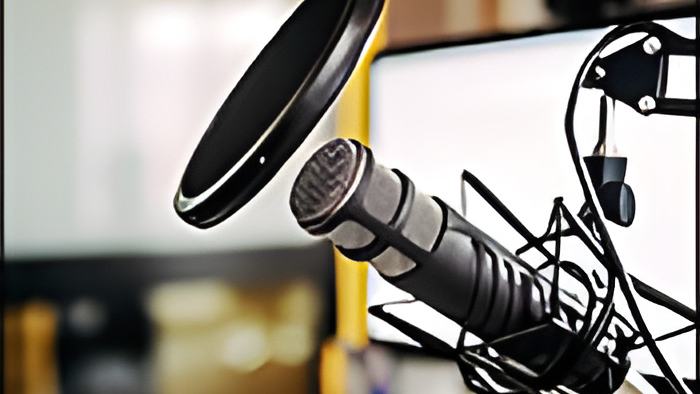
Podcasts: they're a form of new media that allows listeners to dive into a new world with no visual elements - usually just the sound of the host and their guest.
And now Belizeans have started hopping on to this trend and sharing their views on various issues that's unique to our history, culture, and everyday life.
And Belize's distinct offerings has also allowed international podcasters to make episodes about our country. Podcasters like Chris Morgan, host of The Wild, who had featured the scarlet macaws and jaguars of Belize in two episodes of its third season. He spoke with us via Zoom last month when the episodes first premiered.

Chris Morgan, The Wild
"I quickly met Rafael Manzanero from Friends for Conservation and Development so we learnt about his scarlet macaw project that the FCD is doing and where his team of guys are researching and protecting the scarlet macaws at their resting sites in the Chiquibul forest so we went down the Macal River by boat with these guys and you can hear in the episode we come across a tapir and monkeys in the trees and finally these scarlet macaws and it was a magical moment. And they're mostly safe in the Chiquibul Forest because so much of Belize is protected but they do suffer from poaching and that's impacting these small number of scarlet macaws."
"Before you ask, I didn't see jaguar sadly. I saw some glowing eyes in the forest quite close to Caracol, it was coming down this muddy slope in the darkness, had my head lamp on, looking into the forest and there were these two big eyes so it wasn't a small animal and they blinked twice with my headlight reflecting them and turned and melted into the forest and I'll never know if it was a puma or a jaguar."
Morgan explained that to transform such a visual story into a podcast that's just audio starts with having a good story that can easily pull listeners in.
But there are those who make video podcasts - which may seem contrary to the point of a podcast - but allows the listeners to see the reactions of their host. And Natasha Stuart, based in San Pedro, does exactly this. She began her journey on Instagram Live during the pandemic and has since transitioned to podcast websites and YouTube.

Natasha Stuart, The Natasha Stuart Podcast
"Generally my podcast is just me interviewing Belizeans who inspire me in some way, shape or form. All Belizeans who are following their dreams or doing something different because I was really hoping to inspire myself and other Belizeans to pursue their dreams and to realise there are so many different things that we can be and do and that there is the support and there is the potential and there is so much opportunity to be had and I listen to a lot of podcast myself and I would use the excuse of being in a different world so my situation is different, my circumstances are different so I decided to find Belizeans who are doing things regardless of their circumstance so I can't use that excuse anymore when I am finding these people who are able to do things regardless."
"I'm always looking and always thinking about my podcast, I'm always thinking of who I want as a guest, I kinda write down a dream list essentially and I reach out to people at any moment in time and tell them that some day I want you on my podcast, I don't know when, I try to think about what's happening in society and make it kinda going in conjunction with whatever it's happening so that's kinda when I would call on them."
And while her podcast is in its early stages, so is Dominique Norales' one. Walasaha, which launched on December 31st, covers a wide array of topics stemming from Belize's rich past and present. Norales explained that this was her way of creating a creative space while studying abroad, and hopes to be inspirational as well as informational. She spoke with us back in March.
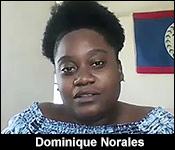
Dominique Norales, Walasaha
"My podcast is called Walasaha which is a Garifuna word meaning our search so I wanted to make it meaningful, I wanted to make it represent my culture and so yeah that's what the podcast is named and about, of course, I'm a huge lover of politics, history, art so I wanted to highlight that with Belize and Belizeaness as you see there with my flag and of course my nationality being at this conjunction of Latina American and Caribbean culture."
"I generally have on - one of the podcasts had on some of my friends, we spoke a bit about racism, about their experiences all around the world and as really black Belizean men and men of color, I have a serious called tun up di ting where I talk to different artists - I've had Nello Player, I've had Daryn Casanova."
Both Norales and Stuart's podcasts can be heard on AnchorFM, Spotify, Google Podcasts and more.
Other Belizeans podcasts include Mada Fyah, The Opinionated Kruffy, Two Teaspoons of Belize, and The Blind Spot.