
Decades ago, before the capital city of Belmopan became greater Belmopan, it was surrounded by a scatter of immigrant and Maya communities; places like Las Flores, Salvapan, San Martin and Maya Mopan. Now, these communities - which are rural by nature - were all subsumed into greater Belmopan - and it's not always a neat fit. Because in the hinterlands, seeing chickens in a yard, a horse, maybe even a goat, pig or a cow is not unusual.
But, for those residents thinking about tying their horse to a lamppost in the neighborhood park, they'd better brace for a 200 dollars fine, and for the animals to be taken away. Their mayor has decided to open up the law book to find a solution to the few handfuls of livestock that are often left to roam populated areas.
But, tonight, there's a pushback from some of the residents who farm for a living, and the mayor explained why he's pushing back. Jomarie Lanza has this story.
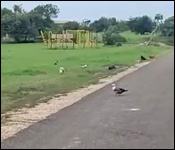
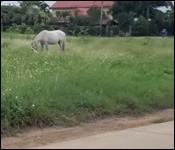
Perhaps the old ways of sustaining a living by raising livestock are not suitable for a fast growing city. We're talking about the horses wandering around near busy roads and schools. And sometimes you'll see a few ducks or chickens. Belmopan Mayor Pablo Cawich says it's starting to become a problem, and their best solution is to emphasize the law that is already there.
Pablo Cawich, Mayor of Belmopan
"We had been receiving a lot of complaints from residents specifically with horses, cattle, and sheep and goats that are being taken to public areas like parks and fields and they just leave them there sometimes tied, sometimes untied to graze. In. Some instances like for example Las Flores and the Maya Mopan area it is right beside the entrance or the exit of the school gate so it endangers the children it endangers the parents that go by to drop off and pick up their children due to that public harm we had to take action and start ensuring that the owners of these livestock are not putting people in danger so that was the true motive why we started to enforce or trying to enforce the livestock portion of the belmopan city council act and the ministry of health Act."
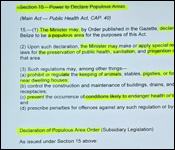
The Public Health Act declares that it is illegal to have farm animals within city limits. Belmopan falls under a declared Urban area, which in turn is not designated as an area for farming.
Pablo Cawich, Mayor of Belmopan
"It's a law that has existed for many many years it is not something that we just implemented or created we are just trying to start to enforce the law to ensure safety for the people."
Pablo Cawich, Mayor of Belmopan
"We have a lot of chicken farming happening within the city as I mentioned it is not something we were trying to enforce, the prevention of farming of chickens, but with this movement for the livestock we also have try and ensure that we address the law in its full capacity based on the recommendations from ministry of health and the Belmopan city council act so for example let me use the chickens as an example the feces that they create is, the toxins usually travel with a air so that goes over to the neighbors as pollution so for health reasons that is why the law was enacted. The recommended distance from farm animals to any residents, any home dwellings is 500 yards so that in itself if we look at the case that you asked about just now if you have a 1 acre parcel of land in belmopan within the city and you have cattle or horses the feces will undergo the same type of effect as the chicken feces so those toxins and pollutants will travel with the air to the home dwellings and that is the portion we have to be considerate about or be mindful about for the health of our residents in the city."
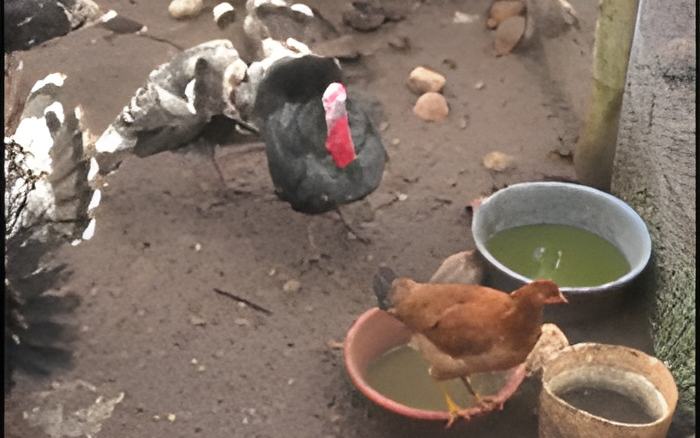
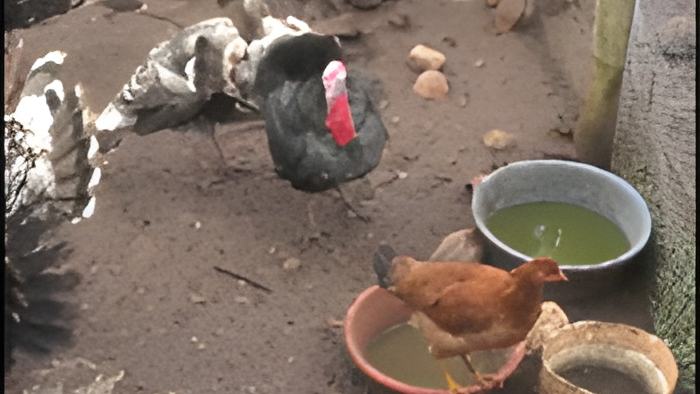
And for those not so populous areas, like Maya Mopan Extension, it still falls within city limits so the law does impact persons like Rosa Teul. She has been living on this land, owned by her daughter, from way before persons began to build homes in Maya Mopan. Her humble way of living is also somewhat a cultural norm for her family. Her only source of income is raising and selling her poultry. She keeps them all in this little fenced corner of her yard, and as you can tell, her chickens are not wandering around near schools or residential areas.
Rosa Teul, Resident of Maya Mopan
"Mostly everybody in Maya Mopan has their chickens, you got to every house and you'll find that everyone has chickens, she says no matter what the mayor does or says she will not get rid of her animals because this animal is not molesting him, as you can see it has a spot that is fenced up where they stay and they do not molest anybody she maintains it with corn, as you can see corn is in there where the chickens eat. When I need to feed them and get them their corn I get one of them sell it and I buy their corn, that is what I do."
Rosa Teul, Resident of Maya Mopan
"Her husband passed away already so it is only her, she says she doesn't get help from social. So with those animals she survives they buy from her and from there she provides for her kitchen."
But Maybe mayor Cawich might consider bending the law for some. Even as they move forward towards becoming a more developed City
Pablo Cawich, Mayor of Belmopan
"As we move forward with development we will always encounter complications that do not fit in the forward movement of progress. In cases like this we have to look at them as individual cases and try to find solutions to that problem. I don't know if the lady in question is renting her property if she is the owner of the property so as I mentioned it is completely a case by case basis that we have to look at these things because sometimes the people might just be renting in the city and that type of farming lifestyle would be more adequate somewhere else. I am not trying to say that we don't want people in Belmopan it is just that some forms of living are not adequate for within the city."
Decades ago, before the capital city of Belmopan became greater Belmopan, it was surrounded by a scatter of immigrant and Maya communities; places like Las Flores, Salvapan, San Martin and Maya Mopan. Now, these communities - which are rural by nature - were all subsumed into greater Belmopan - and it's not always a neat fit. Because in the hinterlands, seeing chickens in a yard, a horse, maybe even a goat, pig or a cow is not unusual.
But, for those residents thinking about tying their horse to a lamppost in the neighborhood park, they'd better brace for a 200 dollars fine, and for the animals to be taken away. Their mayor has decided to open up the law book to find a solution to the few handfuls of livestock that are often left to roam populated areas.
But, tonight, there's a pushback from some of the residents who farm for a living, and the mayor explained why he's pushing back. Jomarie Lanza has this story.
Perhaps the old ways of sustaining a living by raising livestock are not suitable for a fast growing city. We're talking about the horses wandering around near busy roads and schools. And sometimes you'll see a few ducks or chickens. Belmopan Mayor Pablo Cawich says it's starting to become a problem, and their best solution is to emphasize the law that is already there.

Pablo Cawich, Mayor of Belmopan
"We had been receiving a lot of complaints from residents specifically with horses, cattle, and sheep and goats that are being taken to public areas like parks and fields and they just leave them there sometimes tied, sometimes untied to graze. In. Some instances like for example Las Flores and the Maya Mopan area it is right beside the entrance or the exit of the school gate so it endangers the children it endangers the parents that go by to drop off and pick up their children due to that public harm we had to take action and start ensuring that the owners of these livestock are not putting people in danger so that was the true motive why we started to enforce or trying to enforce the livestock portion of the belmopan city council act and the ministry of health Act."
The Public Health Act declares that it is illegal to have farm animals within city limits. Belmopan falls under a declared Urban area, which in turn is not designated as an area for farming.
Pablo Cawich, Mayor of Belmopan
"It's a law that has existed for many many years it is not something that we just implemented or created we are just trying to start to enforce the law to ensure safety for the people."
Pablo Cawich, Mayor of Belmopan
"We have a lot of chicken farming happening within the city as I mentioned it is not something we were trying to enforce, the prevention of farming of chickens, but with this movement for the livestock we also have try and ensure that we address the law in its full capacity based on the recommendations from ministry of health and the Belmopan city council act so for example let me use the chickens as an example the feces that they create is, the toxins usually travel with a air so that goes over to the neighbors as pollution so for health reasons that is why the law was enacted. The recommended distance from farm animals to any residents, any home dwellings is 500 yards so that in itself if we look at the case that you asked about just now if you have a 1 acre parcel of land in belmopan within the city and you have cattle or horses the feces will undergo the same type of effect as the chicken feces so those toxins and pollutants will travel with the air to the home dwellings and that is the portion we have to be considerate about or be mindful about for the health of our residents in the city."
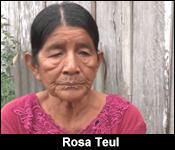
And for those not so populous areas, like Maya Mopan Extension, it still falls within city limits so the law does impact persons like Rosa Teul. She has been living on this land, owned by her daughter, from way before persons began to build homes in Maya Mopan. Her humble way of living is also somewhat a cultural norm for her family. Her only source of income is raising and selling her poultry. She keeps them all in this little fenced corner of her yard, and as you can tell, her chickens are not wandering around near schools or residential areas.
Rosa Teul, Resident of Maya Mopan
"Mostly everybody in Maya Mopan has their chickens, you got to every house and you'll find that everyone has chickens, she says no matter what the mayor does or says she will not get rid of her animals because this animal is not molesting him, as you can see it has a spot that is fenced up where they stay and they do not molest anybody she maintains it with corn, as you can see corn is in there where the chickens eat. When I need to feed them and get them their corn I get one of them sell it and I buy their corn, that is what I do."
Rosa Teul, Resident of Maya Mopan
"Her husband passed away already so it is only her, she says she doesn't get help from social. So with those animals she survives they buy from her and from there she provides for her kitchen."
But Maybe mayor Cawich might consider bending the law for some. Even as they move forward towards becoming a more developed City
Pablo Cawich, Mayor of Belmopan
"As we move forward with development we will always encounter complications that do not fit in the forward movement of progress. In cases like this we have to look at them as individual cases and try to find solutions to that problem. I don't know if the lady in question is renting her property if she is the owner of the property so as I mentioned it is completely a case by case basis that we have to look at these things because sometimes the people might just be renting in the city and that type of farming lifestyle would be more adequate somewhere else. I am not trying to say that we don't want people in Belmopan it is just that some forms of living are not adequate for within the city."
It's a clash of two different visions: a shining garden city on a hill, and another one that exists within it - residents who carved their plot out of thick bush, eking out a subsistence existence at the bottom of that hill - by January we will know if they can coexist. Until then, one resident is already getting ready by tying up his poultry rather than facing a fine.