As September ends the nation's children have yet to return to school with indications from educators and GOB being that classrooms will remain empty for the foreseeable future. But what's the alternative?
Well, it's either online or paper-based learning, two methods that teachers and parents alike have had to quickly get behind. But what does the day to day of learning in a digital age look like? And does any school have an upper hand?
Cherisse Halsall visited two city schools one private and one public to get a firsthand look at what it's like to teach and learn online.
That's Belize Elementary school teacher Melanie Bodden teaching a class during one of her live sessions. It's quickly becoming the new normal for teacher-student interactions. But Bodden says it's part of a dual system to keep her students as engaged as they can be with the coursework.
Melanie Bodden, Standard 6 Teacher, Belize Elementary School
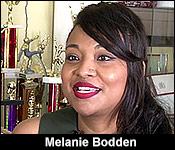
"If you were to see my lessons I have images showing that compliment my voice because for a minute the kids want to see you they want to see their teacher, as much as they might feel frustrated with us we've come to learn that they do appreciate it, they appreciate the structure and the one on one contact so I do share my face but I also provide cartoons, and illustrations and diagrams to facilitate learning."
"I think this entire pandemic has taught all of us the need to loosen up and not be so rigid, everybody is just so fixed and I think the ones who are able to survive this time are the ones who are flexible and can adapt, because you can't be rigid anymore. Anything can happen, so it's almost like I know that what's you are doing, I know you are not fully watching my 15 minutes video, but just know that when you come on my line I can grade it, I can record it - so that's my check and balance right there. You might be able to watch 5 things at the same time, I want to ensure that you are learning, because I can't stop them. I am here and they are at home. Some of them are by themselves, some of them do have someone sitting with them, some of them don't start until their parents come home. Their parents come home at 5pm. So there are so many factors that we have to take into consideration. It's just a matter of putting things in place. If they do this, then we have this to balance it out."
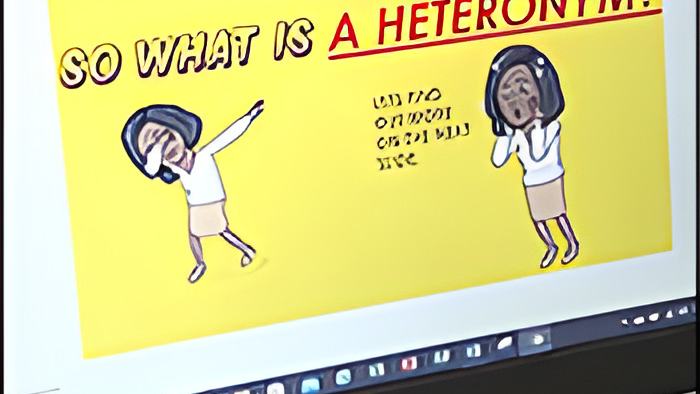
And while Bodden's lessons are exceptionally well lit her colleague Julio Gonzalez is making himself a cartoon character to teach such fundamental lessons as the definition of a computer. And this morning he shared the importance of reaching his students through language and examples that are already part of their world.
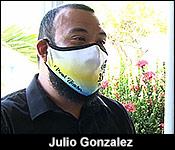
Julio Gonzalez, Computer Science Teacher
"I think the kids really do like my video lessons. I try my best to make it colorful to make it lively and it has to be things that the kids are familiar with, it has to be things that they know about because of course if we talk about things that do not necessarily apply to them and their lives or things that they can relate to, again the message goes right over their head and the lesson is not as effective as you'd like it to be."
"Luckily for us here at Belize elementary we have already set our minds that our online platform is now going to be our backbone of our teaching and our curriculum face to face is going to be supplementary just to double check on the kids, make sure they have their work done, if they have any questions to ask they can ask questions, which is the reason why we have live sessions. We can have our video lessons, our instructional videos, we can have kids assign work and they can turn it into us and we can evaluate our assessments, but the live sessions are really what hold the kids accountable for the work that they have done and then you can double check and make sure that what the concept of your lesson is, they are actually grasping."
But while Belize Elementary School has been provided with the resources to grab the digital age by the horns, public schools are off to a slower start. This afternoon I headed over to grace Primary where teacher Maisy Arnold told us about how she shifted from the regular classroom to Google's classroom platform.
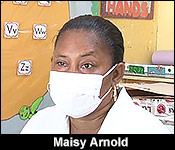
Maisy Arnold, Teacher Standard 4
"I actually started from school closed after March 20th because I wanted to keep my students who were in Standard 3, because I was teaching standard 3 then. I wanted to keep them engaged. I wanted to keep them familiar with the school work that we weren't able to give them at the time that we were home, so I started then. I've had a fairly good trial run of it before I really needed to use it. It's difficult to get all the information you need across especially when your thinking about the information whereby you need some sort of interaction, so some information can be given via our platform that we are using the Google Classroom, but its going to be difficult to do other certain topics or certain activities whereby you need to see how the children are performing and what they are doing."
Cherisse Halsall:
"What's the most challenging subject to teach, I know that language will be different from math, science will be different. What's the one that really task you guys to communicate over these types of platforms?"
Maisy Arnold, Teacher Standard 4
"Language arts, because it's filled with so many components. We are use to focusing on whole language to get everything out of maybe use a story and try to get as much as you can out of the story, but it's more difficult now with that because it entails a lot of reading and we are not sure if that's what the children will be doing or are doing, so that's the most difficult past now. We had to go right back to the old where you teach grammar only, phonics only, vocabulary only - so that's what makes it hard."
Nicolette Awardo, Teacher, Grace Primary
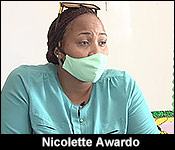
"From what we gather with questioning parents I have about roughly 60 to 65% of parents who have access to an electronic device and internet at home, other parents have to work on data which is not that reliable therefore that poses some challenges."
Cherisse Halsall:
"Do you feel that your students are losing anything this year by not being face to face with you in the classroom?"
Nicolette Awardo, Teacher, Grace Primary
"Yes and no. Yes, because there are certain students that need that extra teacher help, that one on one."
And with face to face interaction off the table for now, we wondered how private and public match up and whether COVID-19 might transform the wage gap into an educational gap as well.
Melanie Bodden, Standard 6 Teacher, Belize Elementary School
"I have a lot of friends that are educators in the public sector and we bounce off ideas and in my opinion those teachers tend to be more creative to be honest, because they are working against all odds."
Nicolette Awardo, Teacher, Grace Primary
"They just have to get on board with it and maneuver the google slides. We try to make it very child friendly and interactive with songs, videos, worksheets - things to make their lives a little bit easier, but they're still learning at the same time."
Both schools are teaching via the Google Classroom platform.