Ever notice that algae gets sunburned? You probably never did - and other than a microbiologist, who would? Well, a team of German researchers are in town, and that's the discovery they've made. It might not sound exactly earth shattering, but it tells scientists about the effects of ultraviolet radiation on sea life. It also speaks to the impact that climate change has on organisms in the sea. Those findings were made aboard a super high tech sailboat called the Aldebaran. Alfonso Noble visited it today to find out more.
Alfonso Noble Reporting,
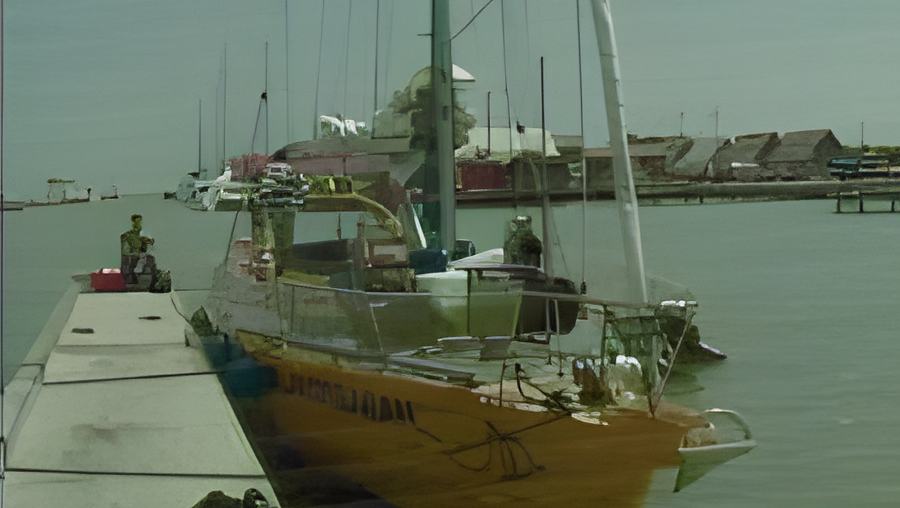
This sail boat bearing the name Aldebaran after the brightest star in the Tauri Constellation is in Belize. From its appearance it looks like a leisure vessel probably sailing the world's waters for the owner's gratification, but it's not. This is a research vessel. In august it left its port home in Hamburg and made its way into the Caribbean and Belize. It has been here for the past two months. The captain is Frank Schweikert.
Frank Schweikert, Captain
"Its 44 feet long and its yellow and we have a lot of technical equipment inside. For example a small radio station. We can transmit directly from the

boat to different radio stations. We also have the equipment to make underwater films. There are three camera equipment, five dive gears, and we can dive directly from this boat and we have a small laboratory. In this laboratory we can carry out the research and the idea of the boat is to combine research and communication work. So the environment is a very nice thing we have and we should communicate it more intensively than it is done regularly by the medias everyday.
We are engaged in communicating nature and making research in nature and therefore we would like to come to Belize to help to communicate and to research the wonderful Belizean environment.
We take images from underwater. We do it on professional cameras and we have many contacts to different medias in Europe, for example the National German Television, the international German TV and we are producing documentaries about the wonderful nature in Belize, especially the coastal zone and we combine it with scientific projects, for example the Hamburg University project. We are looking especially for algae but we also help local projects."
But more that exposing the wonders of the seas through documentaries and radio programs this vessel is half about promotion and half about research. On this voyage they have Dr. Dieter Hanelt from the University of Hamburg. His study centers on the effects of ultra violet light on algae.
Dr. Dieter Hanelt, University of Hamburg
"The algae are affected and as the algae are affected by increased ultraviolet radiation. We can see that increase in the ultraviolet radiation in the polar regions cause a decrease in the color of the algae and our question was if this also happens in the tropics and the sub-tropics under other conditions. So the question was how the algae behave if there is UV radiation."
And while that is the preliminary finding of the research, Aldebaran will be in Belize 6 weeks more investigating those findings and looking for other undersea wonders.
The crew on board the research vessel Aldebaran is preparing a documentary for National German Television. The expedition started in September 2006 in Hamburg. Since then, the vessel Aldebaran has traveled 18.000 nautical miles.