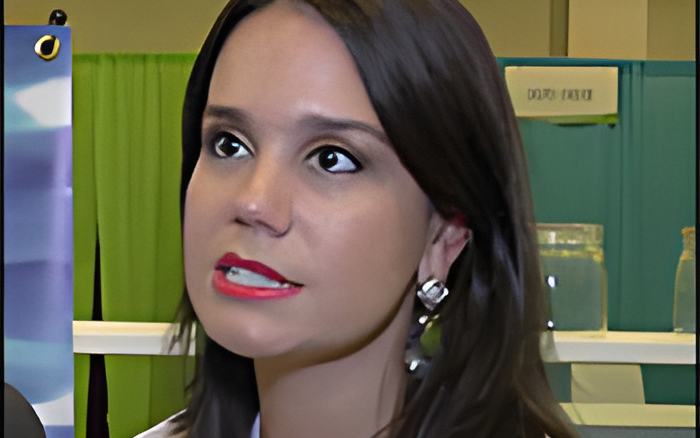

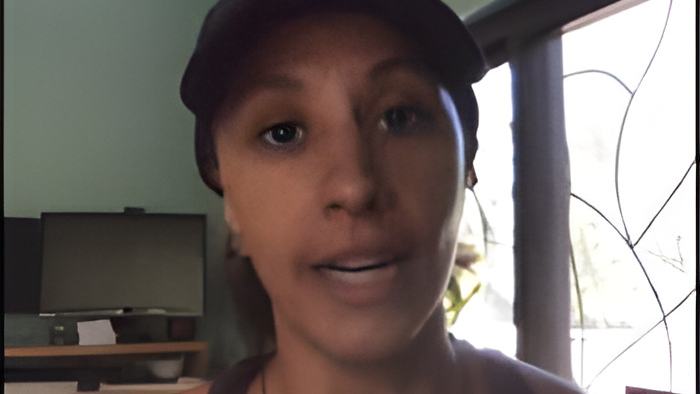
On Friday's news, we showed you our interview with the Crocodile expert, Dr. Marisa Tellez. Several months ago, she discovered that the pollution in the now infamous New River was killing off these apex predators.
As we told you, she and her team from the Crocodile Research Coalition happened on that worrisome state of affairs while they were conducting a survey of the entire crocodile population in Belize. For the past 6 years, she has been in Belize studying these animals, and she's been working with the Government. They first want to find out just how many of these animals call Belize home, and then, they will help GOB come up with a conservation and management action plan to ensure that there is less contact between crocodiles and humans.
On Friday, she told us that Belize shows great potential for demonstrating how humans and crocodiles can co-exist, even though their natural habitat is slowly being encroached on by population growth. Here's how she explained why:
Dr. Marisa Tellez - Executive Director, Crocodile Research Coalition
"A couple of years ago, the Government had asked me and CRC to lead a countrywide population survey of the Morlet's Crocodile. So, we have 2 species of crocodiles here. We have the Morlet's Crocodile, which is more mainland, more fresh water, and then you have the American Crocodile that you find along the cayes, the coast, but they're also moving inland, given that their habitat is being destroyed, especially along the coast and in the cayes. And so, the reason for gathering this information is the crocodile population almost went extinct here in Belize in the 1900s, for overhunting and then for trophy hunting. And in 1981, with Independence, the crocodiles became protected, and the Government was interested in how their population has grown, how it's possibly stabilized. And so, now, we have the growing crocodile population in parallel with the growing human population here in Belize. And so, Government really wanted to know what the population was of this particular species, so that we can then sit down, look at the data, and create a conservation and management action plan that would ensure the survival of the species but, at the same time, mitigating human/crocodile conflict, and also examining ways that people can utilize crocodiles for financial purposes, such as eco-tourism."
"Belize has a fantastic opportunity to be a model, for not just the region, but for the world in regards to co-existing with crocodiles."
"Being present in Placencia, for example, when I first established CRC on the Placencia peninsula, right away, we were receiving calls. Marisa, we see a crocodile. Okay, what is it doing? It's swimming. Is it swimming toward you? No. And it was very much, well, yes, the crocodile is swimming and it's swimming away, and that is good behavior. That's what a crocodile does."
"Fast-forward to now, I will receive calls of Marisa, I see a crocodile, but they are participating in our citizen science program. They're getting excited to see crocodiles. And so, it's providing the education, and people now, on the peninsula, they know, now, it's about 5 p.m., 6 p.m. It's crocodile feeding time. I'm gonna make sure that my child's not near the lagoon shore. I'm gonna stay right next to my pet. Or if my pet is outside, I'm gonna make sure that I'm out there. So, people have learned how to co-exist with the animal. And I feel here in the communities in Belize, as I've traveled to conduct some of my other research, people love wildlife. Wildlife is part of the Belizean culture, and they want to co-exist."
Her organization, the Crocodile Research Coalition, is headquartered on the Placencia Peninsula.