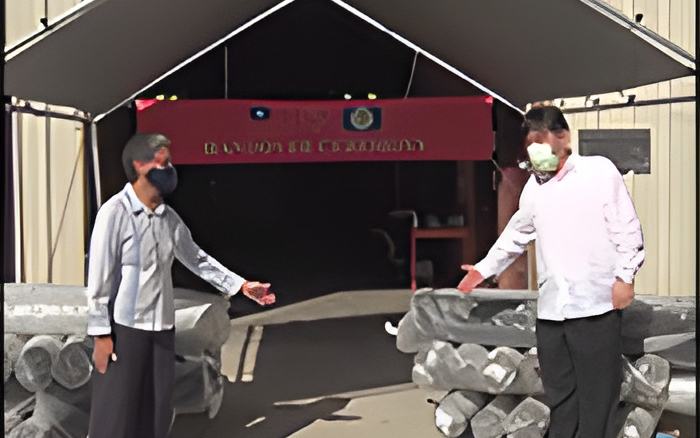

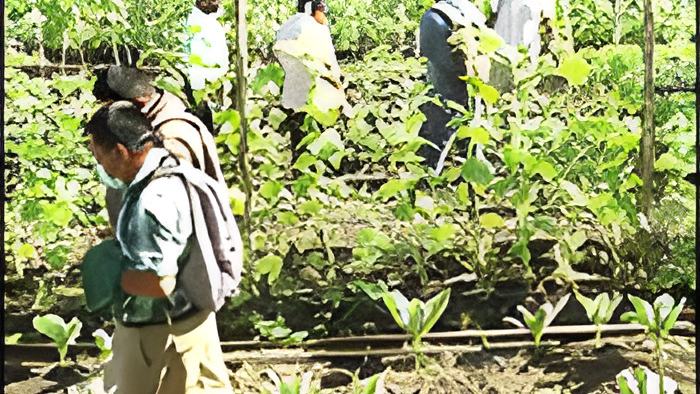
On Friday we showed you a preview of our team's trip to Blancaneax Lodge where ten farmers from the Toledo District learned the basics in organic farming. The project is a partnership between three entities the goal is to encourage farmers to move away from livestock farming in an effort to preserve Belize's natural resources. The farmers got a tour of Blancaneax's organic garden and were taught by the conservation expert, Paul Lister. Courtney Menzies joined the rural farmers and has this story that's bigger than just farming - its about the philosophy of farm management:
Belize's jungles and rainforests are like green gold in a world where massive amounts of deforestation have caused detrimental effects - rapid climate change, air pollution, disturbance of ecosystems, for example.
That has led Paul Lister, the founder of the European Nature Trust, to assist in the preservation of natural land and forests in Belize through the sharing of his knowledge with those whose ecological footprint is larger than normal citizens.
And on Friday, Lister introduced livestock farmers - who use way more land than they need to - to the magic of organic farming in hopes that eventually farmers all over the country will move away from producing so much livestock.
Paul Lister, Founder, European Nature Trust
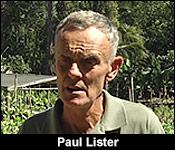
"I just think that humans have inflicted so much suffering on the natural world. From insects that get splattered on your car wind screen to mink farms in Denmark to shooting non-native birds as a sport in England to rearing animals in industrialized landscapes like pig farming and I just think that so much suffering has gone on at our hands and it's about time we slow it down."
"I think that my view is that we need to look at the way we manage our landscapes quite differently and the key factor is that so much forest and nature has been cut, burned for livestock. I don't think people realise but something like 20% of non-ice and non-deserts on this planet has been destroyed so that we can rear livestock. Now that's not just keeping the livestock, it's also the food, it's a huge part of that. Now Belize is not the main culprit, trust me, the main culprit could be other parts of the world, it could be Brazil, North America, It could be Australia. But Belize has got such a unique ecosystem, it's worth stepping the next direction in the right way. We don't wanna make the same mistake that other countries are made of clearing more forest for rearing livestock."
And while Lister is not promoting veganism, he is encouraging people to consume less meat and more fruits and vegetables.
This led him to partner with Ya'axche Conservation Trust and Blancaneax Lodge. The Trust provided the farmers while the Lodge provided the knowledge of their own extensive, self-sustainable organic farm. The management ensured that all eggshells, coffee grinds, manure from the horses, and tea bags are using as compost for the garden - which provides 80% of the food for the Lodge's three restaurants.
According to Ya'axche' Executive Director, it is for this very reason that they were more than willing to be a part of the partnership.
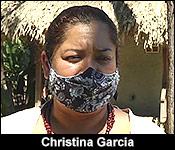
Christina Garcia, Executive Director, Ya'axche Conservation Trust
"What we try to promote a lot is an integrated farming system so you have farmers that are not only dependent on the cattle but they can do other things and this is a perfect example of one new thing that they can do."
"Here you have a lot of backyard gardening happening here using organic compost, we see the familiarization of vermiculture as well, restoration of soil, soil management, water management is an important thing that we see here today and certainly it is something that the farmers in the south have more of a benefit."
And the wealth of knowledge they gained won't go to waste. One vegetable and cattle farmer says he was more than excited to start learning about organic farming.
Carmelo Juarez, Farmer
"My farming approach has been an experimental situation where you guess what you doing and so whatever knowledge you can attain from skilled people makes it much much easy. I've always contemplated doing organic farming because I believe in growing what I consume and if I am to consume something healthy I should be able to share either by selling or giving away valuable product."
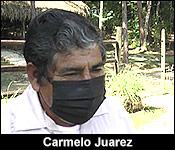
"I'm very impressed with what is happening here and I'm very keen with the approach that is used in using the natural resources that we have to protect our plants from insects and to add nutrients back to the soil."
After the training session, the farmers flew home to Toledo, ready to get down and dirty in the soil to practice what they learned.