
body,td,th { font-family: Arial; font-style: normal; font-weight: normal; }
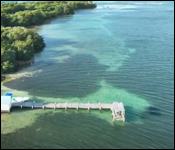
Yesterday we gave you a sneak peak at the conservation work happening out at Glover's Reef involving various species of Sharks in Belize. Their populations are being threatened and Jomarie Lanza went to the Glover's Reef Research Station to find out why:
Throughout history, sharks have been labeled as ruthless predators, capable of devouring anything in their path.
But what if i were to tell you that though they may be apex marine predators, many at times end up being prey.
Hoyte Peckham, Global director, Community Fisheries
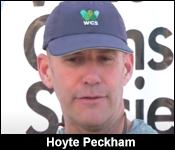
"It took a while, you know because of the bad press with jaws and all these things people figured if you were pulling sharks out of the ocean, you were helping humanity, and not really realizing the effect on the ecosystems or eventually on humanity."
Indeed, the shark population worldwide is on a decline, so much so that conservationists have taken action to devise a ten year shark strategy to regulate and stabilize their populations. The research station out at Glover's Reef atoll serves as a home to this study and plan of action.
Luke Warwick, Director of Shark and Ray Conservation
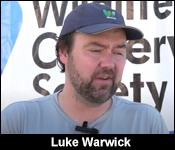
"So Glover's reef is a globally famous location for shark and ray conservation and research. So here on this atoll is where some of the first research ever conducted took place into how do you protect sharks and rays using marine parks, marine protected areas you know national parks in the ocean. Here researchers over the last few decades have undertaken work to understand what factors increase your chances of conserving these predators. Sharks and rays are actually the second pet threatened group of animals on the planet now. They are very slow to grow and reproduce and that's lead to huge population declines around the world. Here in Belize where there is a national ray sanctuary and there are strong fisheries management measures in place for sharks we have started to see stabilization and some recovery. But the work here at glovers conducted by WCS and partner scientists from locations such as Florida international university and most marine labs have allowed us to understand better what types of conservation action we should conduct to save sharks and rays. We really do face losing these ancient ocean predators in the next few decades unless we all act globally to save them. A bit like Jaguars and big predators on land these species really can't take high levels of pressure from humans and just like those predators on land they help keep healthy marine ecosystems by eating sick and older fish, keeping coral reefs in balance."
There is a lot of money to be made from catching, selling and often smuggling shark game and fins to other countries. This is why stricter laws have been enacted like a ban on gillnets and a ban on shark fishing within a 2 mile buffer out at the cayes.
Hoyte Peckham, Global director, Community Fisheries
"In other parts of the world where WCS works. There is very intense targeted fishing. People are actually targeting sharks somewhat for me. We have programs in Guatemala just across the way and people are eating the meat, but then selling the fins to overseas markets, and that is a huge driver, because the fins are so incredibly valuable."
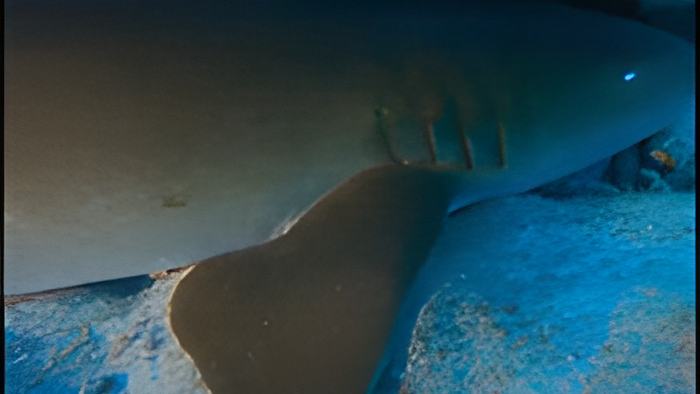
There are over 1000 shark species in the world with only a few dozen of them living in Belize, like the Caribbean Nurse Shark and Reef Shark. Researchers noticed a decline in their numbers 30 years ago, due to sport fishing, wildlife trafficking and other illegal fishing activities. The root cause of this stems from poor management of a country's marine resources.
Pamela Castillo, 30 By 30 Marine Director

"30 by 30 is out global recognition that we need to make peace with nature and that is reflected in a global target that is conserving the 30% of our oceans by 2030. So this means that we need to work collectively to conserve our planet and a live system that oceans protect so that means that if we want to achieve 30 x 30 we need to center the real Sea stewards of the sea the coastal communities as leaders of this process. and that is where our center strategy is the core of our strategy is to assist and support government governments around the globe to be able to have a equitable process, generating local enabling conditions for coastal communities to not only be in power, but actively engage in the management of the resources."
While there have been drastic changes in terms of regulation and policy. Conservationists try their best to work with the locals who depend on the sea for income. How can they provide alternative livelihood support that will not result in them harming the ecosystem or disrupting the balance in a food chain?
Nicole Auil Gomez, WCS Country Director

"Fishers are going to do illegal activities when they may have no other recourse when that may be the way that they are able to feed their families so we need to be looking at the social aspect of fishing. We have to be understanding. What are the drivers? what brings people from Belize and what brings people from outside of Belize and how do we develop collaborative projects and initiatives to help alleviate the pressures that they are under to enter our waters in a way that we may have been doing so for Belize, where we support with alternative or supplementary livelihood initiatives through grants, through training, and many organizations and initiatives that have been supporting these things. Right now we are doing an assessment of those past projects to be able to develop something with the communities to understand what maybe be better suited for the communities that use Glovers Reef in particular and South water Caye. What Would be better suited for them for income support?"
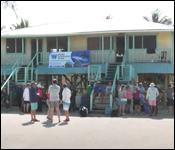
The activity is part of a Shark Conference featuring global, regional, and local experts'.