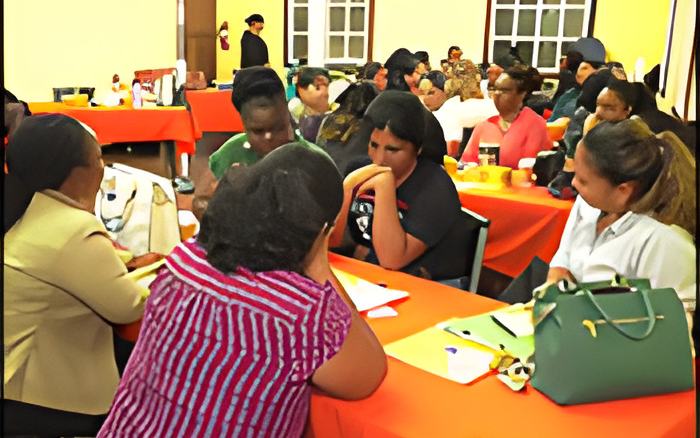

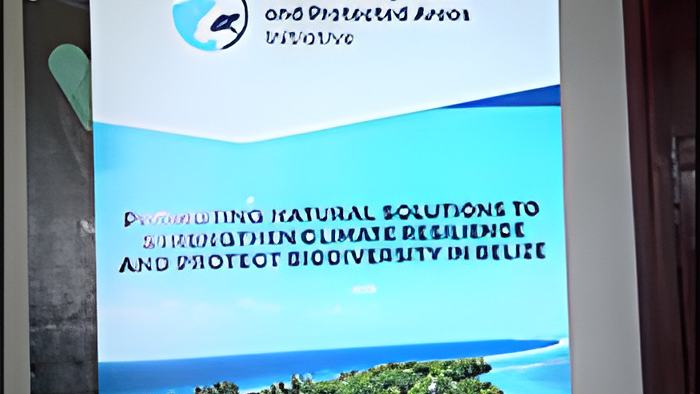
The Wildlife Conservation Society is hosting a three day training workshop to discuss and share information on developing Nature-based Solutions for Climate Adaptation.
Up to 25 representatives from different stakeholders have been attending, and today Jomarie Lanza stopped by to learn more about the training.
Whether marine or terrestrial, each protected area needs its own nature based solutions in order to survive climate change. This is why the Wildlife Conservation Society is hosting its very own Nature-based Solutions for adaptation training session where they have invited partners from different NGOs and entities to share and exchange information on what works best for them and what nature based solutions can they develop which best suits each ecosystem.
Nicole Auil Gomez, WCS Country Director
"So this week we are welcoming our partners, the international Institute for sustainable development based in Canada we have a project we have been working on together. It is a global project, and we are implementing it in Belize, and we are really trying to develop nature based solutions for
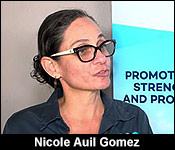
adaptation work for communities, who utilize the Glovers Reef Marin reserve the south water Caye Marine reserve on the Maya forest corridor. So it is a collaborative initiative and this week we have the pleasure of having them with us to train us and to train in our our partners, government partners, civil society, partners on what all of this means These are complicated terms. It has a lot of impact on communities. How do we work with nature? How do we harness the power of nature really to make the best decisions to protect Belize and Belizes wildlife the threats of climate change."
"So we have about 25 people here today with us and how it varies everyone will take home something different I suppose so we are looking at landscapes and seascapes. We are looking at managers We are looking at education people working in communities, so I think everybody will take a little bit it is a lot of information I'll start there. It is really rich with things that we have to take home and kind of study a little bit more and how we can use that in our own landscapes. It might be a little bit different so what we might be doing in the Mayor forest corridor for instance, may be a little bit different from what the Belize Maya forest trust does in their site."
So how would something like this work in the Maya Forest corridor? A Community coordinator told us more today.
Sayuri Tzul, Community coordinator, Maya Forest Trust

"In the terrestrial ecosystem. We also manage freshwater, and the communities directly benefit from rivers creeks lagoons that can not only bring biodiversity but they as well use it for their agricultural practices, which is the base of their livelihoods."
"We have learned a lot we have learned from understanding what are nature base solutions approaching strategies, and how to implement that in our respective work as a community coordinator I have learned about how to properly engage communities, and each community is different. They are culture and what they really appreciate when it comes to nature and their environment."
This project is also currently underway in other countries across the globe. This also helps to see what may work in other countries and how these solutions can be tweaked to better fit others.
Alec Crawford, Director of Nature for Resilience
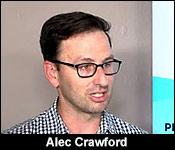
"So with the training I am one of the facilitation teams so the team from ISD is supporting the team from WCS the participants in learning more about nature based solutions for adaptation and with the broader project I am working on global level activities, so the project is not just being implemented here in Belize, but it is also being implemented in parts of Africa, and different landscapes, as well as in Fiji."
"There are obviously very big differences in terms of the context and we are talking about Zambia Zimbabwe Uganda Belize Fiji these are very different places, but at the same time across the board conservationists are dealing with many of the same issues they are dealing with issues you know the integrity of their protected areas they are dealing with the threat of climate change. It is manifesting itself in different ways and through different impacts, but we think that many of the solutions they can use to address those impacts, share the same kind of root ingredients, and we are hoping that through this project we can learn across these sites, the most effective ways of trying to address these climate impacts."
The training concludes tomorrow.