
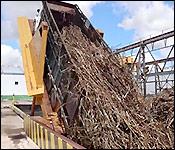
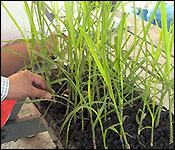
There are approximately 30 different varieties of Cane that grow in Belize, and some of them are of a higher quality than others. To ensure stable and consistent production of sugar the factory BSI ASR has taken to researching new varieties of cane to cultivate, one that can withstand crop diseases and varying weather conditions. Today they gave us some insight on their new approach to planting a new variety of cane through several methods. Jomarie Lanza has this story.
In order for an agricultural crop to survive, particularly cane, the varieties being planted need to be rotated every so often.
In last year's sugar crop, the yield did not meet targets compared to previous years. In the past, the factory has processed over 1.3 million tons of cane, and this time it fell to about 900,000 tons.
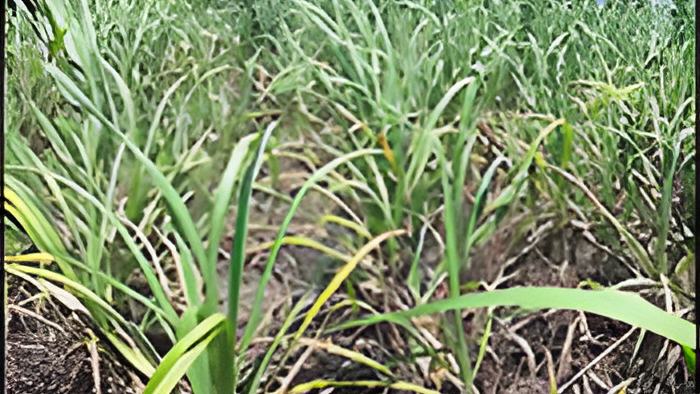
Farmers have lost acres of cane to disease and other climate change factors, and as a result of this ASR BSI has begun to explore other varieties of cane. - to find types that are not only disease resistant but of a higher quality and yield per acre.
Mac McLachlan, BSI General Manager

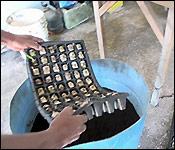
"About 83% of the current cane that we have in the north of the country is in 2 principal varieties. Now they have done very well they are really good varieties and they have lasted well for a long period of time but any modern sugar industry needs to keep switching out its cane varieties to make sure you are improving them and not just improving them in the sense of the yield that they provide and the quality of sugar they contain but it is also their resistance to a lot of thing including climate change, drought, and flooding as well and also to diseases and pests so the project today, I am pleased to announce the approval of 3.5 million Belizean dollar project to construct green housing and shade housing we will be bringing tissue culture plants from Florida from our operations in Florida and we will be planting those tissues here and bringing them to a point where we can then put them out into other fields to grow for seed for farmers in the future with brand new varieties we have been developing over the last 10 years from through our relationship with the Barbados cane breeding station and we are very confident these will be better varieties."
By March they hope to import 750k plantlets to Belize. They will be propagated in the fields where an irrigation system is being built to ensure strong and rapid growth. The stalks will then be propagated for a second time before the seeds can be made commercially available to farmers.
Adrian Zentina, Manager of R&D & Sustainability

"We need to have very good seed to take out to farmers for them to use in their fields. It starts of by producing tissue cultured plants which starts off id say at the pinnacle of the pyramid and from there we further propagate in the fields to expand the amount of seed that we have and then in year 3 finally we go out to farmers. When we identify a variety the main limitation in that point in time is the seed stocks that we have and at this point we are very very limited in the seed stocks although we found superior genetics in our experiments but getting it out to farmers fast enough to really make an impact is what has slowed us. Us adopting tissue culture then unlocks that where we can begin to get varieties out to farmers much faster."
60% of the industry is covered in the B79 variety of cane, but ASR/BSI is pushing to broaden the range of varieties being planted.
Mac McLachlan, BSI General Manager
"Choosing a new variety is a long process these varieties have been under development for 10 12 years, you start off with a little seed bud really that you start to develop, then we send them to Barbados and they are crossed with other varieties so that we get the best of varieties they are stronger varieties and then you keep developing and we throw out most of the ones that we try because they are not better than the originals and they have to be better than the originals and that is both in the sense of the amount of yields you are going to get so the tons of cane per acre and the amount of sugar that the cane will contain, the amount of sugar per acre as well and that is I said, it is a long process. We have now got 11 new varieties we are pushing forward, 4 of them we want to commercialize quite rapidly because we think it is going to be a game changer frankly for the farmers and for the whole industry."
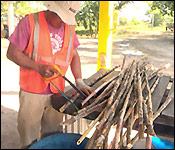
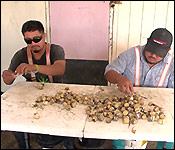
The current practice of using cane to plant cane - meaning they are cut down to nubs and boiled at 50 degrees Celsius to try and remove diseases - is not always 100% viable.
Adrian Zentina, Manager of R&D & Sustainability
"The seed that we have been producing is clean seed, it is free of disease and it is genetically pure. The current practice that we are attempting right now putting in interventions to change that is to use seed from perhaps from your neighbor or you know you've replanted a small portion there and you use it for your own however you are not guaranteed that, that seed is free of disease it has not been treated in the right way that it needs to be treated for it to be classified as seed. What we are now doing and very excited about and investing in this project is to produce seed for the general farming community to gain access to clean seeds at affordable prices and to have new varieties out there for them."
And once these new varieties are made available commercially, McLachlan says that farmers will have numerous opportunities to be subsidized and have access to purchasing seeds. With a goal to renovate, modernize and rejuvenate the industry in a sustainable way.
Mac McLachlan, BSI General Manager
"You are aware that we have a lot of support coming at the moment both from the government and the development community and the 5C's which is the regional climate change body that has access to the green climate fund has helped us to develop a project that is worth 50 million Belize dollars over 5 years. That project is actually going to buy the seeds, that we produce to help subsidize the cost of that for the farmers. The 5Cs and also the world bank funding and government funding through DFC is going to subsidize the replanting for farmers by 40cents in the dollar so 40% subsidies to help farmers overcome this debt and this burden that they have had for a long time."