
And back on the COVID front, Belize District Deputy Regional Director Dr Diaz isn't the only one who's overwhelmed. The health staff at hospitals across the country are taking a hit, and the national referral hospital is no exception.
The nurses, doctors and even administrative staff at the KHMH have been working non-stop since the start of the pandemic, and now that we're going into a third wave, they've been busier than ever.
Long hours, few resources, and the stubborn anti-vaxxers are only some of what they have to deal with on a daily basis. And being on the frontlines means their health and that of their closest relatives are always on the line.
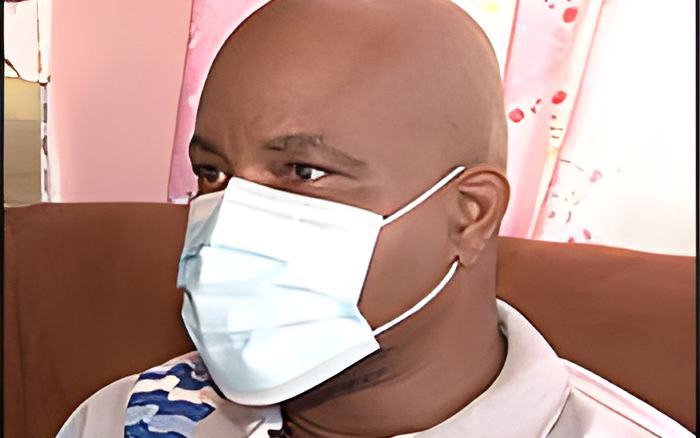
Today, Courtney Menzies sat down with one of KHMH's nurses, who's been there for about two decades, to hear about some of the struggles nurses face. Andrew Baird first spoke about the constant worry that everyone in the hospital has, even outside the COVID unit, and how that pressure has been building with the shortage of nurses.
Andrew Baird, Nurse, KHMH
"On the ward because these patients do not come as suspected cases, we do n ot where all the PPE's as it may be in isolation, in most cases some nurses may have N95 or K95 masks but in most cases it is the regular surgical masks and we try to do hand washing as often as possible but the reality is when you are dealing with six, seven patients per nurse and you're in a cubicle and you have five, six people there you're giving attention to one and the next one call you and you need to go over to the next bed sometimes from one bed to the next you are not able to sanitize or wash your hand so when one person in the unit was negative and become positive it's grave concern not only for nurses but patients because cross contamination can happen in that way."
"There's no doubt that we are overworked, we are burnt out, but we continue to give service to the people of this country and the nurses in Belize are dedicated nurses to the profession, we understand our role and responsibilities but there's only so much one may be able to give of him or herself in this profession and there must come a time where the government must understand we need a fix to the problem we have right now with the shortage of nurses and this pandemic. Giving out scholarships or so is in the long term because if you give 50 scholarships and 30 of those go to registered nurses and those nurses will go to UB for four years, that's four years away. The other 20 for practical nurses, they do a year and half in UB so you're still a year and a half away from fixing the shortage that may be able to help."
And with the Filipino nurses leaving and the Henry Reeve Cuban Brigade long gone, the Belizean nurses are feeling the stress possibly more than during the second wave. And this time it's compounded by the frustration that a lot of the patients could have avoided hospitalization if they were vaccinated. Baird says the public must do its part to help to save their lives and the lives of those they love - as well as to relieve the stress on the healthcare workers.
Andrew Baird, Nurse, KHMH
"I think the general public needs to understand their role, their responsibility as citizens of this country and to ensure we do not have continue to have the type of spread that we have. This is drastic time as far as this pandemic is concerned which calls for drastic measures. We want to remind them that we are human beings at the hospital, we have family that we have to come back home to, we have family that want to see us comeback home and free of the virus and be able to go back tomorrow and work again but certainly the general public has an important role in doing what is necessary to prevent the spread of this virus as it is right now on us."
"It's not something that any medical personnel would want to have to witness or see on a daily basis, people dying in front of them and for reason being they could have prevented their death by securing themselves with a vaccine or so. There's no way I'm saying the vaccine will prevent you from getting COVID 19 what the vaccine does as we have heard before it to prevent the critical illnesses, like any other vaccine, for example we took vaccine against chicken pox but we still see people get chicken pox but because we're vaccinated we don't have a widespread that becomes a pandemic or that we can call a community spread in Belize, that's what vaccination does, prevent community spread that cause people to die so I once again urge the general public, it is not just about you but think about your friend, your relatives who work in the health system who have to bear this burden on a daily basis when we go to to work and have to come back to our families."
Baird went on to say that not taking the vaccine is a selfish decision because of how many people that one choice impacts - family members, coworkers, and health workers, among others. He explained what it's like working with that constant fear of catching and spreading the virus.
Andrew Baird, Nurse, KHMH
"I surely think that they are being selfish indeed but when these people come to the hospital, we still take care of them without any kind of ill feeling towards them knowing that, like one of my colleague said, they're bringing work to us unnecessarily, but again we as nurses we deserve the right to be heard in these instances and I appreciate that the various media stations are now taking the time out to speak to the people directly who are dealing with the COVID patients on a daily basis to hear from us what we're going through, it is not an easy thing for you to go to work on one of the wards and we take are of a patient and we leave 3 in the evening and at 6 we get a phone call from work that say you were exposed because patient x turned out to be positive on the ward and this is a daily life in these times that the nurses re living especially in the emergency room where these emergencies come we have to take care of them and because they require immediate attention and wed cannot screen them because it is life threatening whatever it could be a traffic accident, a gun shot, then that patient becomes positive and you get the call and you already come home to all your relative or friends who are here with you and they also become exposed."
"You wait another three days you have to lock up in your room waiting for the swab results, you get paranoid sometimes hoping the result is negative because you know you were already close to your children and families and if you turn out to be positive it will be more impactful on the home."
Baird also pleaded for the hospital to retain some sort of mental health professional to look after the mental well being of the staff.