
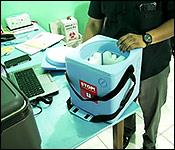
At the start of 2023 we told you about the major upgrade to Belize's Cold Chain system that came courtesy of UNICEF and the people and Government of Japan which was intended to improve national vaccination rates and guarantee that the vaccines administered were of the highest possibly quality.
Tonight, we're diving back into that story with a look at the importance of the Belize's much bolstered vaccine cold chain. It's a process of transporting and storing vaccines that relies not only on specially designed refrigeration systems, and solar-powered cold storage facilities, but also well-trained healthcare professionals who form the backbone of such a critical system.
I traveled to two villages in the north and West of Belize to take a look at how vaccination campaigns in remote areas have continued to keep Belizeans young and old healthy and out of the hospitals. Here's more:
This news feature is a collaboration between 7 News, UNICEF, the people of Japan, and the Ministry of Health.
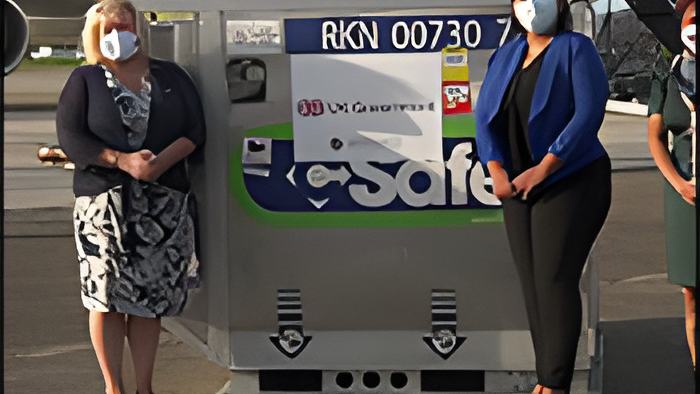
By the end of the pandemic, you'd seen this image quite a few times. Vaccines on the tarmac at the P.G.I.A., a triumphant sign that we were armed and ready to fight COVID-19.
What you may not have known then was that those weapons would only remain effective so long as the cold chain was maintained.
But what exactly is the Cold chain?
Dr. Natalia Beer
"A cold chain system is. comprised of different types of equipment to keep the vaccines at a temperature that is required by the manufacturers to preserve the efficacy and effectiveness of the vaccine."
And why is a cold chain important?
Well, without a complete an effective cold chain, the nurses at August Pine Ridge had been unable to guarantee that the vaccines they were administering would have full effectivity. 7 News was in the village on the day tht all changed.
Eleanor Sanchez, Nurse Assistant
"We learned that the, we have more proper storage for the vaccines because you know at first with these refrigerators we, sometimes we were worried if we would leave the door open or if we all went home and then it's not secure and then we were thinking, you know, it might, when we come early, we see well, oh ok, yes it's okay but now with this it will be more secure and we know that we will be notified if the temperature is going up and down so we will be more alert with the vaccines."
"Well 100% because we can rest assured now that everything that is given to the children is accurate vaccination that will be given out."
"The refrigerator now brings an alarm so that it will be turning on if the temperature is not within the normal range."
Cherisse Halsall:
"And if you are at home when that alarm goes off how would you understand that it is going off?"
Eleanor Sanchez, Nurse Assistant
"Um, well we have equipment to monitor that will be hooked or linked with our mobile phones so that if we are home or somewhere else we will get the notification that something is wrong and then we can come and check as quickly as possible."
And it's much the same elsewhere in rural Belize, where vaccines have to be transported to their destination by health care workers like the Ministry of Health's Edgar Can.
Edgar Can, Pharmacist & Vaccine Technician, MOHW
"I'm the one who manages and distributes the vaccines throughout the health centers in the country."
"From here they will bring an ice box special for vaccines, so we tend to when they come it takes a process and we have the cold boxes, the cold packs which we have to accondicion."
"Once it's ready then we have monitors, we use monitors being thermometers to see that the temperature is okay. Normally the temperature, the ideal temperature will be two to eight degrees celsius. So, once it reaches that level then we can transport it. So it will live from here and it will normally be leaving from leaving in a cold box and then transported to the health centres and then from there they will store it in an ice lined refrigerator or it Ould be a domestic refrigerator. Still, they are also the temperature is two to 8 degrees we would have to store the vaccine in. That is the ideal temperature then for the vaccine. We normally distribute to the main health center, the regional."
And this is where the cold chain ends all the way west at the Valley of Peace Health Center where Ministry officials have brought Polio, MMR, Measles and Rubella vaccines.
Edgar Can, Pharmacist &Vaccine Technician, MOHW
"So once it reaches the hospital then some of the nurses they will. Go and do mobile, yes so what. They will use, they will use a vaccine carrier so they will, they might reach like 7 in the morning. They have to, also they have to accondition the ice box because we. Have vaccines that are sensitive means that if we just put the vaccine in the vaccine carrier then the vaccine will get frozen and it won't be good anymore."
Dr. Natalia Beer
"Here is where we receive all the vaccines for the country and then from here we distribute to the different districts based on needs."
"Vaccines are critical when it comes to room temperature. It needs to be strictly controlled so, the temperature needs to be controlled from the manufacturing company to when the individual receives the vaccine."
"When vaccines come to Belize we clear them immediately. We have support from customs department and they are cleared immediately in irrespective of the date and time they arrive and then they come directly here."
"Once it is dispatched to the district then it travels in vehicle to the district storage, usually at the rural health centers and there they manage the distribution to the lower - which will be the rural facilities or mobile clinics and then throughout that process they maintain the cold chain also."
"We do have villages that the staff needs to walk into the village a few kilometers, a few kilometers, not. And they either back the vaccine in vaccine carriers or they take it on horse."
Edgar Can, Pharmacist &Vaccine Technician, MOHW
"We have a freezing tag, it's a monitor where we monitor. The temperature. So, once the temperature. Is okay then we get what we. The nurses would get the vaccine that they need and they will seal the. Vaccine carrier and then they will transport it also to the furthest health center that they are going to or the village when they are doing mobile."
Dr. Natalia Beer
"Vaccine carriers are designed for a workday session so there is no compromising the transportation."
Edgar Can, Pharmacist &Vaccine Technician, MOHW
"As I tell you with the vaccine carrier that is. the ideal one. We don't, we normally, those are adequate for vaccines so we don't really use other types of storage, yes."
This news feature is a collaboration between 7 News, UNICEF, the people of Japan, and the Ministry of Health.
We will continue with this series next week when we look at how vaccines work and how UNICEF and Japan are supporting Belize's adherence to vaccine schedules.