
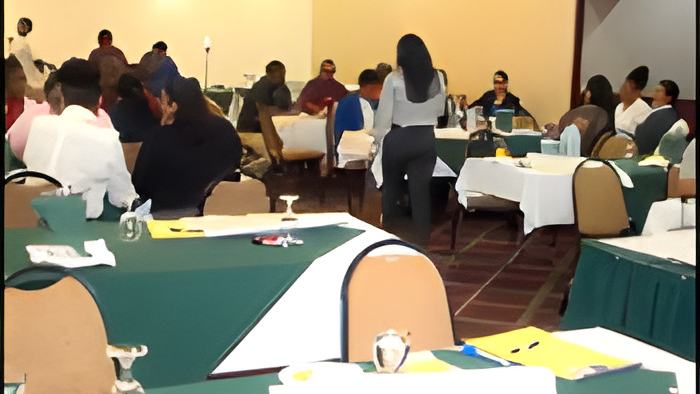
Adolescent Substance use is an escalating public health concern, and the Ministry Of Health And Wellness has recognized an alarming trend emerging in Belize. In hopes of tackling the problem they have developed a strategy to promote adolescent friendly health services for youths across Belize. They will spend the next few days training health professionals on how they can integrate these across numerous health facilities. Jomarie Lanza was there at the launch and here's how it went.
Though they spend millions caring for babies and the elderly population, the Ministry of Health and Wellness has identified a gap not being met in the patients that they care for, the adolescent population. In an attempt to correct this, they've launched an adolescent friendly campaign to address the stigma and discrimination associated with accessing health services for these young persons battling substance misuse, mental health and other issues. The Director for Public Health and Wellness told us more:
Melissa Diaz Musa, Director Public Health & Wellness
"As a part of the ministry of Health and Wellness's mandate is to ensure that health services are given equitably and without any stigma and discrimination and this doesn't matter with regards to the age of the patient or the person who presents to our facility we realised that there was a gap when it comes to services for adolescents, particularly there is a gap in for example sexual and reproductive health services, mental health service and we realise that adolescence were not actually coming to our facilities or even when we go to schools we did not have the sort of what we needed in terms of the cooperation from adolescent and so we launched an adolescent strategy in health in 2023 and these trainings now form part of that we are ensuring that the operational plan to this strategy that we ensure we start to do our training not only to adolescents and to the general public but we also need to build capacity in our providers so our healthcare workers at every level to ensure that adolescents are welcomed and that adolescents do not feel stigmatised or discriminated upon and are able to access health services that is the only way we will improve the health of our population."
The National Drug Abuse Control Council created the concept of the training series which will consist of 3 virtual sessions. Their director explained some of the things they will cover within the trainings.

Esner Vellos, Director, NDACC
"This workshop is a two day in person training but before we reached to this point we had four virtual sessions right and in those four virtual sessions we gave an opportunity for the participants to become aware of the national health strategy so that they can relate in terms of what it is that we are trying to achieve. Two we taught them about having the knowledge of what is stigma and discrimination, how stigma and discrimination affect the general population and how stigma and discrimination affects accessibility of services and today we are putting all of this together so that now that the participants have a notion of stigma and discrimination they know about the national strategic plan in terms of adolescents and health now they are putting all of this together so that they can improve the services that they are offering and also create a much better networking systems so that all of us are on the same page speaking the same language so that any way, shape or form we can achieve the objective of ensuring the younger population accesses these services more rapidly, and also in a way where stigma and discrimination is not part of the services."
Adolescents in Belize comprise 22% of the population according to UNICEF. Their Health and Nutrition Specialist walked us through some of their findings. He says that the data was staggering, and he explained why.
Dr Olusola Oladeji, Health and Nutrition Specialist UNICEF
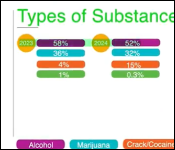
"We discovered that among the 2,700+ people that were seen by NDACC 45% of them were adolescents, 45% between 10 and 19 and what are they consuming? Marijuana and alcohol, even though males consume the drugs more than females there is no difference in whether in times of males or females consuming the particular drug items. Officials also discovered that the consumption of crack and crack cocaine is also increasing and so many other things. And when we did the study there are few things that define the study, risk factors and barriers. We found that adolescents have some personal problems, mental issues and emotional problems and also at a family level we found out some children are being exposed at home to substances. The parents are drinking, their uncles are drinking at ten years old, they are asking them to drink so they see it as part of life. At a community level there is access you go some places and even though they tell you alcohol should not be sold to a child under 18 but this is not being followed they can go anywhere."
"Also in schools we find that people are selling alcohol in schools, marijuana in schools and edibles like that. We also discovered part of the challenges they face are stigma and discrimination, they need help they want to talk to somebody but they are afraid because of judgement, stigma and obstacles like that."