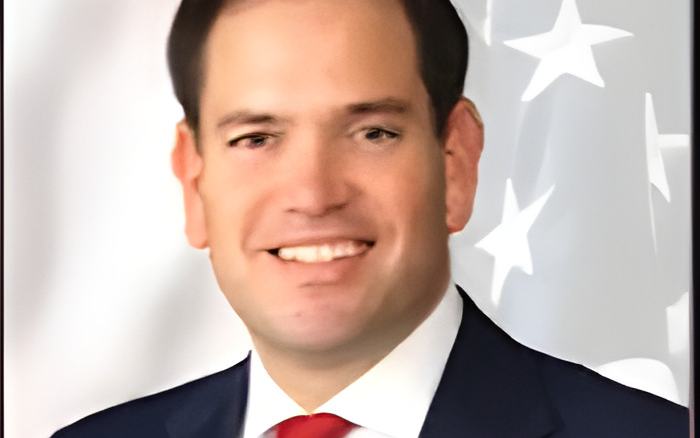

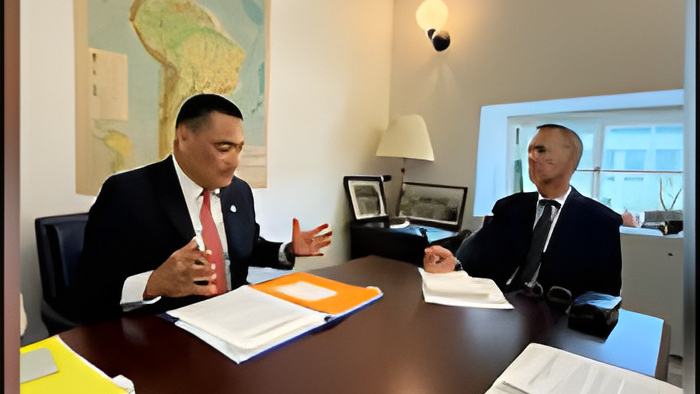
Foreign Minister Fonseca just returned from a two day trip to Washington, DC where he held many high level meetings.
The centerpiece of that trip was the singing of a memorandum of cooperation with the United States Department of Homeland Security for a Biometric Data Sharing Partnership.
The sharing of biometric data has raised some public concerns and we asked him about it:
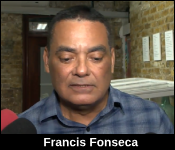
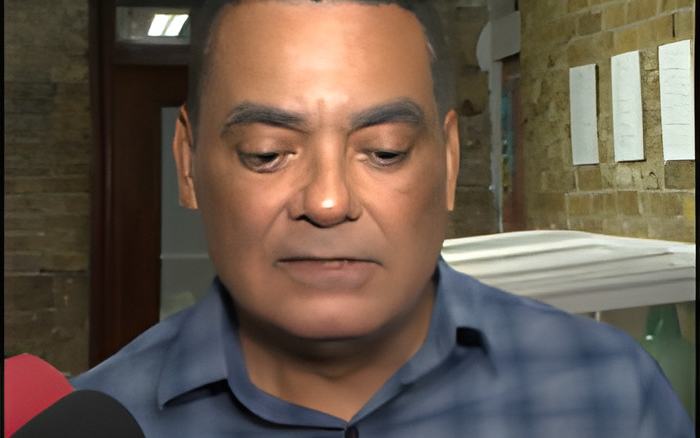
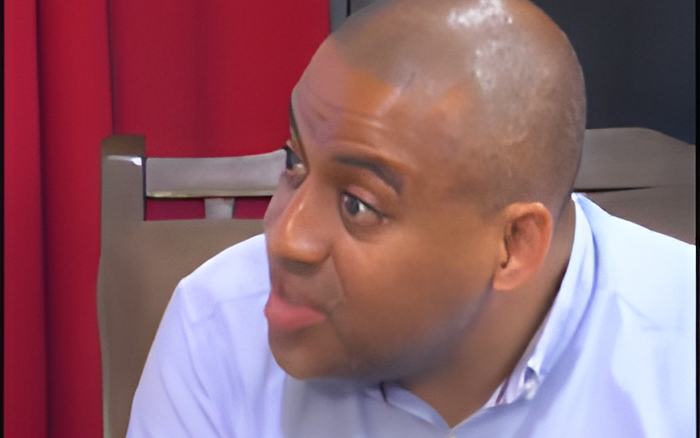
Francis Fonseca, Minister of Foreign Affairs
"This is a memorandum of cooperation that has its genesis going back to 2009, when a letter of agreement, what they call the Mérida Initiative letter of agreement, was signed in Belmopan in 2009. And the entire focus of this biometrics data sharing partnership memorandum of cooperation is to promote and support border security and public safety."
"So it involves two agencies and it involves the Immigration Department and the Belize Police Department. And they will provide under this memorandum of of cooperation support to Belize, the technological support software, hardware, and infrastructure to support our work at the border. It's all aimed at combating - a shared commitment we have with the US- combating narco trafficking, human trafficking, terrorism, organized crime. That is the whole objective. And I want to make the point. Listen, that there is no question about anybody should be concerned about personal data. The memorandum specifically provides safeguards for that and make sure that no personal data can be transferred to a third party. The memorandum is governed by the national laws of Belize. So everyone continues to enjoy the protection of our Constitution and our national laws."
Reporter:
"So as it's envisaged, whose biometric data will be shared, will it be, persons whose fingerprints may be taken in the police department, but will it also include persons who traverse Belize's sovereign borders?"
Francis Fonseca, Minister of Foreign Affairs
"It will be on a request basis. So there is a database that will be set up. But both countries know it's a reciprocal agreement. But it will be based on a request basis. Data will be collected. But the United States government or the Belize government may want information about a particular individual who is crossing the border, who is suspected of some criminal activity. And then they would request that information from Belize or the United States."
Reporter:
"So it wouldn't be, as it's envisaged, a mass capture of the biometric data of all persons transiting these borders."
Francis Fonseca, Minister of Foreign Affairs
"Data will be captured, data will be captured. But in terms of the sharing of that data, the sharing of that data is based on requests on a request basis, where there has to be specific grounds for requesting that information to be shared."
"But we need to capture data. We need to capture data about who is traversing our borders. That is integral to public safety, integral to border security. So that's critically important."
Reporter:
"But you can see how there would be public misgivings about signing an agreement where any data is shared because citizens have a right to informed consent, citizens have a right to privacy. And we know that the United States is a surveillance state, and people might not want their data shared because theY will be or they may be criminalized or persecuted in the United States Because of this data."
Francis Fonseca, Minister of Foreign Affairs
"No. Absolutely not. I don't see I don't see where the logic is in that at all. Data is being collected now. Anybody who travels to the United States, their data is collected. You apply for a visa, data is collected. So this is about protecting our borders. This is about border security. It's about public safety."
Reporter:
"Protecting their border though."
Francis Fonseca, Minister of Foreign Affairs
"Well, they have an interest in protecting their border, but we have an interest. I, as I said, listen, I sit on the National Security Council. We are very, very concerned about the movements of people across our border, for criminal activities based on criminal activity. We don't have the capacity to monitor that effectively. So we need the support of a country like the United States. So for me, it's absolutely clear that this is critically important. And as I said, I am absolutely satisfied that there are full safeguards in place to protect, the privacy of individuals, to protect the personal data of individuals."
Reporter:
"I don't want to sound conspiratorial, but you can see how persons in the public might say, well, if they assist us with the technology, then"
"It's not unheard of for persons who designed such technology to have a back end capture, an ability to take something out of the back end, even though the front end might have all these safeguards in place."
Francis Fonseca, Minister of Foreign Affairs
"Well, if people are as cynical as you are, yes, they will come to that conclusion."
Reporter:
"But we are dealing with the Imperium."
Francis Fonseca, Minister of Foreign Affairs
"But as you know, the United States government, they can get any information they want already on anybody. They have the capacity for that. So this is putting in place a structured process, cooperation arrangement where we work together as a shared goal and commitment, protecting our borders."