
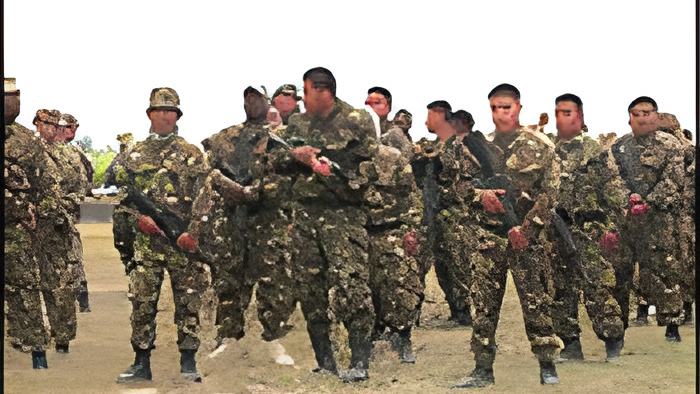
And switching gears, earlier this month, we showed you the opening ceremony of the Exercise Tradewinds 2022 - which Belize is co-hosting along with Mexico. It's a military summit that happens every year and this year, it involves soldiers from 22 countries and focuses on collaboration between the security forces and partner agencies.
And during the four weeks of intense jungle training, as well as the other activities that are a part of Tradewinds - including live firing, riverine training and training with explosive devices - the main goal is for the soldiers to create networks among themselves - while also expanding the region's capability to mitigate, plan for, and respond to crises. This year's scenarios concentrate on foreign military interaction, maritime interdiction, ground security, cyber security, and field training exercises.
And today, the media got a firsthand look at some of the activities. Courtney Menzies was there and has this story.
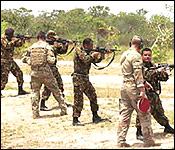
Four weeks of roughing it out in Belize's dense jungles was the centre point of Exercise Tradewinds 2022. And while those soldiers trekked out of the woods and back into civilisation, others were engaged in live firing training at the Hattieville Gallery Range, which was the main location for the Tradewinds' Media Day.
The day started with a twenty minute helicopter ride from the Police Training Academy in Belmopan to Hattieville, where members of the press corps were strapped in next to the soldiers.
And after a smooth landing, the acting chief of staff at the Belize Defence Force explained more about the different activities of this year's Tradewinds Exercise.
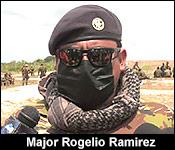
Major Rogelio Ramirez, Acting Chief of Staff, BDF
"This exercise commenced almost two weeks now. We have about 378 BDF soldiers participating in this exercise, from the lead planners Luietenant Colonel Roberto Beltran, the other planner, Major Briceno, and other personnel operating at the different levels from the planning stage to the execution being out in the Guacamayo training area for the four week exercise, the basic jungle warfare course, there are people in Manatee and now what you're seeing here is personnel doing live firing, members of different countries are here sharpening their skills, sharpening their capabilities when it comes to shooting and marksman ship so that's the main thing that is happening here in the Hattieville gallery range but another aspect of this is the interoperability and I think the colonel earlier in the briefing mentioned that is an important aspect. Also the integration, you know, if you have an issue, if you have something you want to know, you have a direct number to call one of the planners in Belize, a WhatsApp call or whatever, so that is an important aspect, the networking aspect."
And the jungle course is one of the BDF's best, considering it's where the soldiers spend most of their time - and with Belize's unique landscape, it proves to be the ultimate challenge. And the captain who put the soldiers through the ringer in the jungle told us that for many of them, it was more than they bargained for.
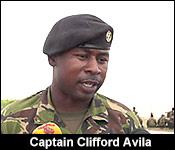
Captain Clifford Avila, Officer In Charge, Jungle School, BDF
"For the past four weeks, the training that these guys have been going through is a very rigorous training. As they say, the jungle is no easy place to survive, the jungle is no easy place to live, they have been trained on survival, they've been trained on different physical aspects. With these guys, they came here, they did not expect the terrain and the jungle to be like this, it's an area that's very mountainous with primary jungle and there's several things that they have to go through to become a basic jungle warrior, things that include the physical assessments that they must past, one of the physical assessments that they must pass is a hill that we call the death trail which is the Benil Quimil which you have to make it up that hill and back down in a time of 20 minutes and that is also the area where they have their classrooms. Some of the other physical assessments include the annual personal fitness test, you have rock march, 8 miles physical test, you have survival training that we teach them that you must go through, we have tactics that you must go through, we have repelling that they did from the heli and we also have small river crossing trainings that we do in the jungle so that's what these guys were enduring for the past couple weeks."
"These guys, when we went to visit them, and as they can tell you, if you ever meet one of them is that many of them met their breaking points but they endured. As rule number five of the jungle says, learn to bear pain and discomfort without complaining and be moderate in your necessities and that's what these guys did. When we commenced the course on the 22nd of April we started off with a total of 19 students and today it was 13 of them that made it out."
And while the jungle training makes for optimal fitness and a skillset only few have, the live firing allowed to soldiers to be comfortable and competent with any weapon they used.
But the most important part of Tradewinds is the interoperability - the networking that happens between these soldiers who come as strangers and leave as brothers. And the BDF, the US' SFAB, and even the helicopter pilot whose main job was to transport anyone back and forth - including the media - expressed their appreciation of being able to collaborate.
Major Rogelio Ramirez, Acting Chief of Staff, BDF
"When you're looking at the interoperability when you're looking at the other nations that are participating, the sponsors, the United States and SouthCom, the other participating nations, it is important to establish this relationship and we've had this relationship with other Caribbean countries, this is just the opportunity to fine tuned them and to ensure that we maintain those relationships with the Caribbean brothers and sisters and our partner nations."
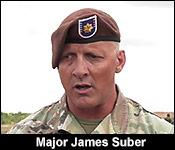
Major James Suber, Charlie Company, 2nd Battalion, 54th Infantry, SFAB
"We're here as a conglomerate to work by with and through our partners, and that is any type of training needs that they have, we also work with them, alongside them, exchanging information, exchanging best practices, and then, really trying to be a part of their improvement as. Military and as a force and what that entails really is advising, assessing, supporting and liaising with our partner nations and with our partner forces."
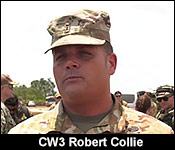
CW3 Robert Collie, CH47 Pilot In Command
"It's always good to get the opportunity to partner with host nations and work with their militaries, our allies work constantly training with them, trying to see the different ways they do things, how we do things, how they can improve, how we can improve, so that we could just support the best way possible."
This is the fifth time that Belize has co-hosted Tradewinds and the first time for Mexico.