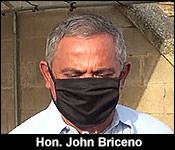
Since he took office in November of last year, Prime Minister John Briceno has made a few controversial comments that stirred public outrage. His most unforgettable quote is probably that comment he made back in February when we asked him about nepotism and he said,"Belize is a small society. We have limited talent." End quote.
And while that may have cost him some political capital - it doesn't cost him any money. But a judgement coming out of the Supreme Court this morning just might.
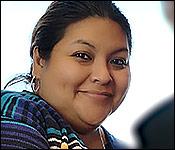
Tonight, Prime Minister Briceno is staring down the second biggest defamation award to ever be granted in Belize. That's because the Supreme Court has found that he unfairly injured the character and reputation of Karen Bevans, the former Director of Tourism. Justice Westmin James has ordered him and the media house, Love FM and Love TV, to pay Bevans 90 thousand dollars for defamation of character.
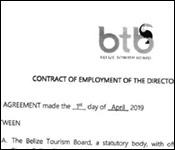
It all stems from an interview he granted to Love at the end of last November where Briceno discussed the employment contract of the former tourism director, and he made certain characterizations that were untrue.
Bevans retained former Prime Minister Dean Barrow to write them a lawyer letter complaining of defamation of character. Through her attorney, Bevans demanded a retraction, an apology, and compensation for injury to her reputation, but the Prime Minister and RSV Media refused. And so, she sued them in the courtroom of Justice Westmin James.
Today the judge ruled that Briceno, Love Television, and Love FM are liable for defamation over the broadcasting of those comments. And, he has ordered them to pay Bevans 90 thousand dollars in damages
The judgment was delivered in a virtual hearing this morning. Shortly after its completion, Dean Barrow, the former Prime Minister who went quietly back to his law practice after retiring from politics, granted 7News an interview at his office. Here's what he had to say about the judgment:
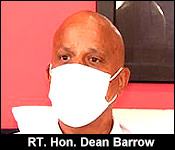
RT. Hon. Dean Barrow, SC - Attorney for Karen Bevans
"As far as I know, this is the first time that a sitting Prime Minister has been found liable in defamation to a private citizen or anybody. And as far as I know, as far as I can recollect, it is the biggest award."
"There was no doubt, or certainly in my mind, and the judge found that it was unambiguous and unquestionable that what he said was very much libelous of Mrs. Bevans. His defence - well, the defence of all of them, but the Prime Minister is the person who spoke the libel. His defence was that the words are not libelous, which that was always doomed to failure. But, he went on to say, even if the words are, on their faces, libelous, I can't be found liable for defamation because the words are true. What I said about Mrs. Bevans is true. If I fail there, then, the words are fair comments. And, my fair comment is a comment based on the underlying factual situation. And if I fail there, he said, then I'm still not to be found liable because although the words may be defamatory. I am covered and protected by qualified privilege, in the sense that, as the Prime Minister of this country, as a public official, I have a duty to speak to the public about matters of importance, of political and governmental importance."
"Fact is that the judge found comprehensively that none of the defences that the Prime Minister raised could avail him. Justification is if the words he spoke were true. Clearly, they were not true. When you say that Mrs. Bevans got her contract as a crony, when you say that she was firing people at the same time, when in fact she got the contract 18 months or so before, it was clear that this defence could hold no water. The second defence: fair comment, well, what he said was not comment."
"He didn't comment at all. He made allegations of fact as to the abuse she was guilty of. So, the defence of fair comment failed. And then, on the qualified privilege score, the court found what certainly the law is. You can't use this notion that as Prime Minister, you're entitled to speak on public matters, to say things about somebody who you knew, or ought to have known are not true. And we made the point, he had the contract with him. He knew the details of the contract. He spoke about the amount, the value of the contract, the annual salary that the lady was given by the BTB. You can't, as Prime Minister, say well, that contract is outrageous. Mrs. Bevans gave herself that contract, and she was able to do this because of cronyism and nepotism, and she's heartless because she did this at the same time as she was firing staff from the BTB. The lady didn't fire any staff. Whatever separation took place, she in fact carried out the instructions of the Board and of the entity. So, to personalize that sort of thing meant that the qualified privilege defence could not be sustained because he could not rebut our charge that, but you knew that what you are saying was untrue."
Unfortunately, this case is a sobering reminder to journalists and media houses of why it is important to carefully follow ALL journalism best practices. Often in our news stories, you'll hear us report that we tried to reach someone for comment in rebuttal to a broadcasted allegation, but that the person declined. That's because there is a very strict need to include the views and positions of all persons involved in every story. There is the suggestion that Love FM failed to seek Bevans out for comment in response to the Prime Minister's allegations.
Here's her attorney explaining why the media house was found to be jointly liable for the defamation to her character:
RT. Hon. Dean Barrow, SC - Attorney for Karen Bevans
"The News Director came to court and was cross-examined by me, and the judge actually made a finding that she was not a truthful witness. And this was so, in the context of her having said, oh, that publication, she said the interview was based on certain questions. It was recorded. I edited the interview, and I could have taken out whatever I wished. But I thought that it was responsible journalism to publish what the Prime Minister of the country was saying."
"In this case, the News Director for Love did not call Mrs. Bevans. She gave a witness statement in which there was no mention of her having made any effort to get in touch with Mrs. Bevans to get her side of the story. In court, she tried to say - when I put it to her, but how could you not have - if you're being a responsible journalist - not have asked the other party for a position. She said, 'Well, I did.' But you didn't say that in your witness statement. 'Well, it was because I couldn't back it up with - my call log had been cleared.' As the judge said, you could have gotten it from the telecommunications company. So, the judge said he did not believe her. It was clear she had made no such effort, and so, the fact that she did not try even to get Mrs. Bevans' side of the story, help to ground the liability of her news organization."