
Back in January of this year, we told you how the Government of Belize entered into an out-of-court settlement with the Government of Saint Kitts and Nevis.
That's after Belize lodged a claim against them at the Caribbean Court of Justice, alleging that as a CARICOM member-state, they were importing brown sugar from countries outside the Single Market without imposing the 40% Common External Tariff. Belize alleged that because of this violation of the Revised Treaty of Chaguaramas, Belize Sugar Industries Limited and Santander Sugar were losing sales to this country.
Instead of fighting the legal battle in court, the Federation of Saint Christopher and Nevis decided to enter into negotiations for a settlement.
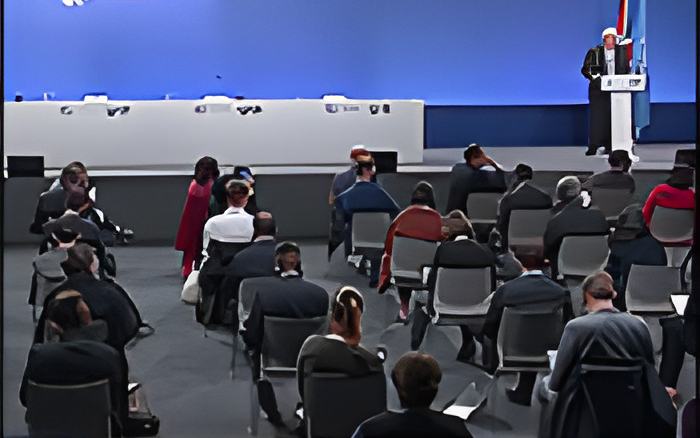
But, the other CARICOM Nation, Trinidad & Tobago, which Belize also accused of engaging in the same violation, basically said, "See You in Court". This morning, the first day of that legal challenge happened before the CCJ, and it was broadcasted live on their YouTube Page.
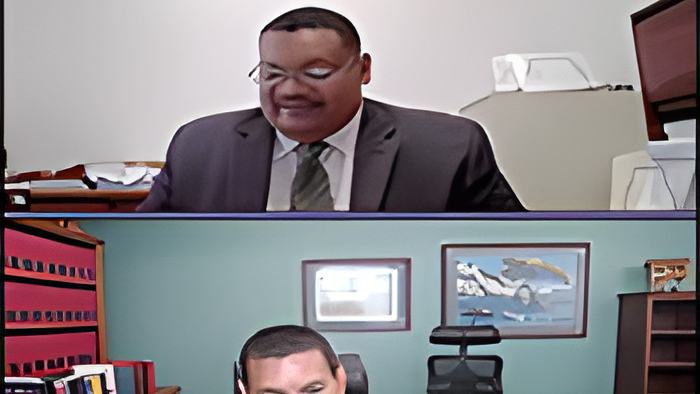
With video provided by the court, here's an excerpt of the heated cross-examination of Andy Sutherland, the Acting Director-General of Belize's Directorate-General of Foreign Trade, by the attorney representing Trinidad and Tobago:
Terrence Bharath - Attorney For Trinidad & Tobago
"I am putting to you that the sum total of your witness statement, which you signed on 18 of May 2021 does not come anywhere near to supporting the reliefs which you claim against Trinidad and Tobago."
Hon. Adrian Saunders - CCJ President
"Do you have a response, Mr. Sutherland?"
Andy Sutherland - Acting Director-General, DGFT
"Thank you, Justice. It was and continues to be a task to pinpoint the exact reasons why sugar - brown sugar - is believed to be imported without paying the CET."
Terrence Bharath
"I'm asking you head-on, frontal. I'm asking you frontally now. Are you accusing the Government of Trinidad and Tobago - is the State of Belize accusing the Government of Trinidad and Tobago of impropriety - not collecting CET, yes or no?"
Andy Sutherland
"Counsel, the act of impropriety in relation to importation does not necessarily have to fall on the government. Impropriety happened within the players associated with the process itself."
Terrence Bharath
"I'm gonna ask you a second time. Frontally again, are you accusing anybody of impropriety in respect of CET? And if so, where could I find that in your witness statement? Impropriety, in other words, is a flagrant breach of the customs laws of Trinidad and Tobago. If you say yes, I want to see it in your witness statement."
Andy Sutherland
"Counsel, I cannot admit to that."
Terrence Bharath
"Thank you very much. There will be no further questions of this witness."
Hon. Winston Anderson - CCJ Judge
"What would the CET be payable on? Would it be the Number 11 international price for the sugar, or would it be the price at which it is dumped?"
Andy Sutherland
"The CET would applicable on the invoice price plus freight - insurance and freight, and as such, it would be levied on the dump prices into the member-state."
Hon. Winston Anderson
"Being dumped does not mean that the CET has not been paid, does it?"
Andy Sutherland
"That is correct."
Next up on the witness stand was ASR/BSI's Malcolm "Mac" McLachlan. The attorney representing Trinidad also strenuously challenged his witness testimony and evidence on behalf of Belize's claim. Here's an excerpt of their conversation during the cross-examination:
Malcolm "Mac" McLachlan - VP, International Relations, ASR/BSI
"It would make no sense because it would be impossible for an extra-regional supplier of brown sugar to compete with regionally-supplied sugar if the CET is being paid. It would make no sense."
Terrence Bharath - Attorney For Trinidad & Tobago
"Hold on. Hold on. Hold on (laughs). Hold On. Are you telling me, for example, that Honduras and Guatemala are bound to supply - or even Colombia or somewhere else - are bound to supply Trinidad and Tobago, or any other CARICOM country with sugar at a particular price, as traded on the world market?"
Malcolm "Mac" McLachlan
"No, they will supply sugar that makes sense to them. They will look for the better price they can get."
Terrence Bharath
"So, let me ask you this question, logically from that. If, for example, Honduras, Guatemala, Colombia - or any other country for that matter - chooses to supply Trinidad and Tobago with sugar, even when the 40% is added, it's less than the price that BSI sells it for. Are you saying-."
Malcolm "Mac" McLachlan
"It can't be, Mr. Bharath, sorry, it can't be."
Terrence Bharath
"Sir, could you just - why do you say it can't be?"
Malcolm "Mac" McLachlan
"Well, because it would be - we would always compete with - it would be economically illiterate for us to sell sugar at a higher price than the CET value for sugar and we're not economically illiterate. We understand what the CET price should be. We understand that we're competing with other Caribbean producers, and that should give us an equilibrium of price somewhere where we're competing with each other that falls well below any sugar that's coming in from extra-regional sources that have paid the CET."
Terrence Bharath
"All the documents of this case that your company has provided, all the documents do not suggest that Honduras or Guatemala are bound by world sugar prices. Where can I find that document in this whole case? That they are bound to supply sugar at that cost, where?"
Malcolm "Mac" McLachlan
"Mr. Bharath, it's a fact of the futures market. Nobody would sell below the price for the future."
Terrence Bharath
"Why do you - you say that and there is nothing you say to back that up."
In this lawsuit, Belize's lead attorney is E. Andrew Marshalleck. We'll keep following the case, and update you accordingly.