
Up to this year, the contractor general's office had issued 18 reports over the past two decades - and we've never even seen or gotten our hands on a single one. Why is that? Well those reports are sent to the House of Representatives to lie on the table, and they die right there.
After going to the National Assembly, the reports are never circulated to the public or the press - it's transparency through the parliamentary looking glass - which can be quite opaque.
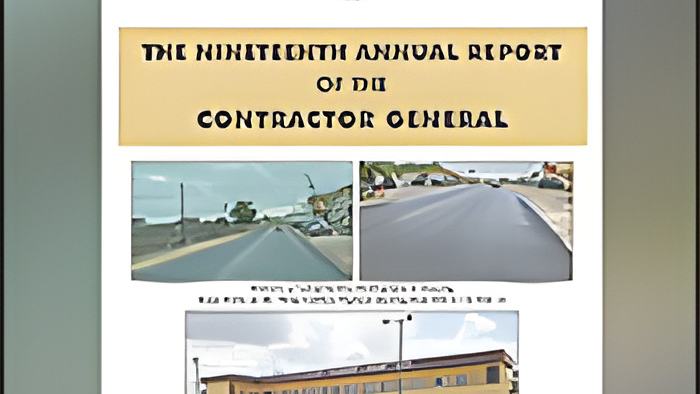
Recently, we've been pushing to change that 20th century model and today - through the office of the Clerk of the National Assembly - we got an electronic copy of report number 19 from the Contractor General. It covers the last 9 months of the Barrow administration, and the first four months of the PUP. And while it makes no big reveals, it is important housekeeping in the business Of open government. And Jules Vasquez has a quick look at the 38 page document:
In the 19th Annual Report from the Contractor General's Office covering the period February 2020 to March 2021, Contractor General Omar Mitchell "reviewed, evaluated, and monitored a total of 585 procurement processes from GOB entities."
The greatest number of those - 213 contracts valued at 42 million were in the Ministry of Health where the Contractor General notes the prescribed open tendering procedure was not used in many instances because, quote, "of the need to procure pharmaceuticals and specialized hospital items to meet an emergency need."
It's a less than ideal situation and the contractor general notes that despite his general plea for open tenders, it was an uphill battle, because, "We are not to be naïve to fail to recognize that hidden agendas were at the core," but he laments, "It is difficult to prove corruption or impropriety without the investigative process, and the need of resources."
His office investigated five (5) allegations of improper conduct, rejected ten items for inaccuracy, contract incompatibility, and unverifiability. The OCG returned twenty-two (22) limited tendering (single source) contracts for "Open Tendering" and requested that two hundred and ten (210) amendments to draft contracts be made.
He stresses that open tendering is the gold standard and says that
"The private sector has and continues making appeals of alleged improper tendering protocols. The local press also incessantly refers to the OCG for verification and explanation. Unless there is a concerted effort to address this perception of corruption, the public, in its many facets, will not stop seeking representation."
One ministry that did a whole lot of limited tender procedures was the Ministry of Infrastructure Development and Housing and the contractor general notes "our infrastructure demanded immediate attention. Cabinet approved emergency funding of 12.5 million dollars for critical restoration of our transportation system and purchase of heavy construction equipment. Against this background the OCG conditionally agreed to the use of "limited tendering".
The report says that he conducted site visits during these works and ensured that value-for-money was effected under these emergency protocols."
Next week, we'll look at one of the documents that fed into this one - the compendious "Completion Report" from the Ministry of Infrastructure Development and Housing.