
Since last week, we've been telling you about the public controversy that's brewing between the Maya of the Toledo District and their representatives and the Ministry of Indigenous Peoples Affairs.
The two sides are unable to agree on the next phase of the implementation of Maya Customary Land tenure, which the Caribbean Court of Justice is overseeing in their frequent compliance hearings. The Government and the leaders of the Maya Communities have contrasting views on what the Free Prior Informed Consent Protocol should say about how the government should treat Maya communal Lands.
Sometime in the future, this FPIC Protocol will form part of legislation that will be tabled in parliament on how best to properly protect and recognize Maya customary lands at the Ministry of Natural Resources. The Maya Leaders Alliance and the Toledo Alcaldes Association say that it does not go far enough to protect Maya Land Rights. Meanwhile, the Government insists that it is a model of maturation which takes instruction from international law precedents that have been established in other countries.
There are some major differences of opinion, and now that the two sides have presented their views on the issue, we have taken a closer look at the arguments raised. Daniel Ortiz put together this report examining a few of the bigger points of contention:
There is a clash of ideologies with the Maya Leaders Alliance and the Toledo Alcaldes Association on one side, and the Ministry of Indigenous People's Affairs on the other.
At the forefront, there is an argument over the Free Prior Informed Consent Protocol. The MLA and the TAA take issue with the fact that the Briceno Government's FPIC document interchangeably uses "consent" and "consultation". They interpret that as a technicality designed to reduce the threshold of responsibility that the State has to the Maya
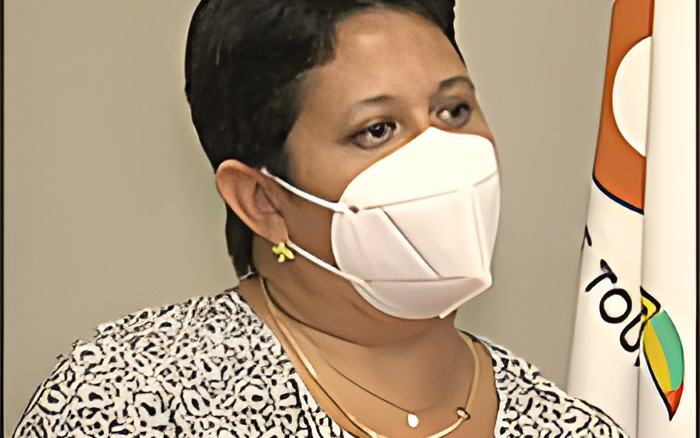
Cristina Coc - Spokesperson, MLA/TAA
"They changed the name of the protocol to call it a consultation protocol, not a consent protocol even after the courts admonish them that words have meaning and that they have an impression. Ultimately consent is what should be sought, not just consultation. You can't just come, talk to us and tell us what you are going to do on our lands. You have to come with the understanding that you are coming to ask for our permission, our approval and we set the conditions for those if we decide to give it."
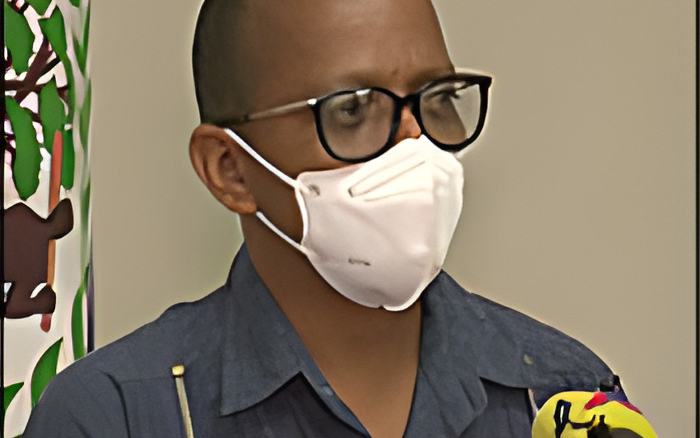
But, the Commissioner of Indigenous People's Affairs says that the Government has to tread carefully. In his younger days as an unyielding Maya rights activist, Greg Ch'oc might have been pre-disposed to accepting nothing less than "consent".
Greg Ch'oc - Executive Director, SATIIM
"I refuse to have government and anybody else tell me what door I should enter my house."
But, now, he is a trained attorney and the Government's implementing agent of the CCJ Consent Order. After studying international precedents, he suggests that the proper and permanent line in the sand where the Maya should give no further ground is a robust right of objection and dissent to any decision a government wants to make about Maya Customary Land.
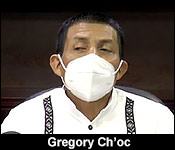
Greg Ch'oc - Commissioner, Indigenous Peoples Affairs
"Everybody wants to obtain the community's consent, but in fact, the threshold has increased because the community now has an option to dissent. There is as what Minister says, there are exemptions where the Government is not required to get the consent of the community."
Hon. Dolores Balderamos-Garcia - Minister of Indigenous Peoples Affairs
"There are exceptions when it comes to matters of National Security, public emergency it's in the document itself public health emergency that kind of thing, and there have to be those exceptions for the protection of the rights of the people. Remember and we're right now still in the COVID pandemic. We're all wearing masks. Your right not to wear a mask cannot trump the public health imperative that we must protect one other."
Greg Ch'oc
"We've not called it consent protocol, because the community will probably get the impression that they have to consent, no matter what. But that's not what international law provides for. There is an option for dissent. If consent is withheld by the village, then it cannot proceed. The administrative action cannot proceed."
It is a problem that his predecessor and the previous government administration also encountered.

Lisel Alamilla - Former Chair, Toledo Maya Land Rights Commission
"There is a different threshold when you are doing consultation versus when you are seeking consent. It is clear that it is intentional at what this document seeks to do is to consult, not necessarily to seek consent."
Reporter
"Do you agree with that position?"
Lisel Alamilla
"Well, if I were representing the Maya people I wouldn't be happy with it. But, I think every government is very afraid of signing on to free prior and informed consent - on all topics - because they are afraid that their hands are tied."
Cristina Coc
"We know that this Government is not voluntarily or any government - would not voluntarily give up their control over a portion of land that Indigenous people are making a claim on. And so, we know that this is a difficult place for the Government."
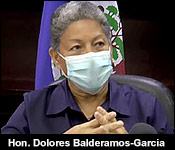
Hon. Dolores Balderamos-Garcia
"The Government of Belize has every intention to seek the consent of communities, but for obvious reasons and this is a matter that Cabinet had to consider carefully for obvious reasons, we can give away the shop if you want to put it that way."
And then, there is that other major divergence of opinion. A group of Maya Rights Organizations has come out publicly to suggest that the MLA and the TAA shouldn't claim to speak on behalf of the entire Maya community.
The Indigenous People's Affairs Commissioner, who once represented the communities as the former Executive Director of SATIIM, says that the present-day leaders of the MLA and TAA are on a path to distort the way Maya Traditional Customary Law addresses decision-making for the good of the community.
Greg Ch'oc
"Maya Customary law is that the decision and the authority for decision making rest at the village level with the villagers. What they're trying to do, what is being done is to corrupt a system. That's fundamentally the naked truth. It's to take a system, where the decision-makers are the villages, and they're now trying to make the alcaldes collectively take that control. The community as far as I'm aware has not ceded that authority to any organization, to any association or NGO. You don't get a blank cheque. Let me put it this way. You don't get a blank cheque from the Maya communities, from the Maya villagers. You don't get it."
Cristina Coc
"I am in full agreement with Mr. Ch'oc. He knows fully well that our customary practice is that the fundamental authority for decision-making rests with the community, and every member of the community. Through consensus and collective agreements, they make these decisions. That is firm. That is what I believe. That is what I promote. That is what is our reality in Toledo. At the same time, every village elects an Alcalde two alcaldes. And these 2 alcaldes join together with the collective alcaldes and form themselves into an association that speaks collectively with one voice on issues broad like the FPIC protocol. To suggest that one could hi-jack the collective decision of our people is basically to say that our people are blind, that they're not able to think for themselves, that they're uneducated, illiterate. And that is the narrative that the colonial framework always promotes."
We'll follow this story as it develops over the next few days.