Over the last few years since American Sugar Refineries took over the Belize Sugar Industry, the millers in the north have been encouraging cane farmers in the Orange Walk and Corozal Districts to modernize their farming practices.
BSI and experts from SIRDI have been encouraging the farmers to do everything they can to increase their efficiency, cut costs, and use their lands to maximize the total volume of cane they can produce. The farmers have been encouraged to embrace concepts like mechanized harvesting, improved drainage to deal with flooding of cane fields, and the Sugar Industry Management Information System, which is used to tell exactly how much cane is in the fields.
And now, the industry is about to embark on another pilot project designed to improve their efficiency and yield. It's called the Belize Smart Sugar Cane Project, and the purpose of this one is to reduce the paperwork headache that is a recurrent feature of the industry's cycle of production.
Today, the local and international partners hosted a virtual launch of the pilot project, and they invited the press to attend. Daniel Ortiz has that story:
The cane farmers from the north are about to make another technological upgrade to the way they do business. This industry, which was built on traditional farming practices, is getting ready to embrace a digital means of book-keeping for a farmers' crop. The farmer, the association he or she belongs to, and ASR/BSI will all be able to discreetly share sensitive financial information among themselves and the creditors who finance the farmer.
Industry experts say that the blockchain technology - which is powering the digital upgrade - should save the farmers and their bank a lot of the turn-around and frustration that comes with the formal parts of the industry.

Olivia Avilez - Cane Farmer Relations, BSI
"The Belize Smart Sugar Cane Cluster project is essentially a digital farmer's wallet, where our 5,200 farmers in the northern sugarcane industry of Belize will be able to digitally access both their cane production activities, and harvesting activities, as well as their financial information and financial activities in 1 platform. We are using a very innovative technology that is highly secured, called block-chain technology. And this technology will enable able us to be able to track throughout the cane production, harvesting, and the interaction among service providers, financial institutions, and the sugarcane farmers with the miller."
Rachel Gabato - Blockchain Consultant
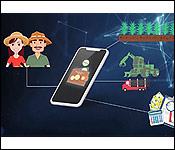
"You have a number of participants. You have the farmers, the farmer associations. You have the financial and lending institutions, the third-party service providers, the agro-input providers. You have the mill, and finally, you have the retailer, or the CPG manufacturer, which is purchasing the sugarcane. But, a participant doesn't necessarily need to be an individual or a person. It can also be a system, such as SIMIS. It can be a device, such as an IoT device that's
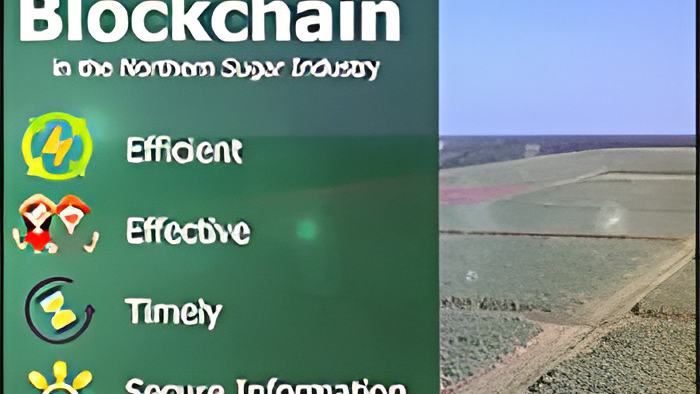
capturing, say the weather, or the MPK of the soil. So, all of these people and devices can contribute data to the ledger system. And what that happens is as they're sharing this information, 1, it's now digitized, and 2, it's digitally available to each of the eco-system participants. And what this enables is the sharing of information in a more efficient, effective, and more timely fashion. It also brings transparency to the supply chain."
Olivia Avilez, BSI "What we want is the farmers interacting with their service providers, whether it's cane seeds, services, or agro-inputs, and especially their creditor or their financial institution, whether that is one of the commercial banks, or a credit union - or in our case, we're trying it [out] with the Development Finance Corporation and Heritage Bank. They're the ones who signed up for the pilot."
The participants in this pilot project will be able to safely share important information:
Olivia Avilez
"The information that gets back to the farmer. The farmer delivers his/her cane, and sometimes, they don't know about that until 2-3 days after, if their cane delivery ticket comes back to them. If it doesn't, then they don't even know how much cane they delivered, how much they will get paid. That in itself, we hope that the platform will be able to almost instantly give that information to the farmer."
"You want the information from a farmer. He has to authorize his association to do it, and then, the association authorizes the information. The bank gets the information - all that process already happens, except it's happening so slowly, via documents, via letters. The farmer has to go into the association, go to the bank. In this case, they will be able to do it through the platform."
"We want to improve the efficiency of how this happens. We want to improve transparency and security. Farmers are very cognizant of the security issues with their information."
Cosme Hernandez - GM, PSCPA
"[It] will help our traceability when it comes to the disbursement of the Fairtrade Premium. There should be better accountability on how the funds are being spent, and they could make better plans on how to address the needs of the cane fields."
Estelia Castillo - Branch Manager, DFC
"It will help us to provide a better service for the farmers. So, if the client is seeing, my production went low this year; I need to renovate only this parcel. The client will be able to come to us with the loan, as fast as he can, for him to be able to replant that area, and also to have the production ready."
The industry stakeholders are asking for support and buy-in for this project so that Belize can better compete with other sugar-producing nations.

Mac McLachlan - V.P. International Relations, ASR Group
"In recent years, low cane prices and indebtedness have financial institutions wary of engaging in the sugar sector. This project, we hope, should make that a thing of the past. And I would like today to challenge the financial sector in Belize to join us and our aspirations to be a world leader in quality-added value sugar production, and embrace our industry through designing innovative agro-credit facilities for our farmers."

Dr. Ramiro Lopez Ghio - Belize Rep., IDB Group
"The country needs to accelerate its economic growth, export in more volume, and with greater value-added. In order to reach this objective, the country is required to increase productivity in the private sector, incorporating technology, and technical and management capacities, and improving access to credit. And that is why we're going in the right direction with this project."
BSI/ASR is hoping to roll out this project during the next sugar crop - which usually starts in December. The BSI representatives tell us that this blockchain system that this project is built on is the first time it is being implemented in Belize, and for a sugar industry. It comes at a cost of 365 thousand US dollars.
The financial institutions which have signed on to the pilot are Heritage Bank and the DFC.