
In other news... last night, we took you to the Grand Caribe Resort in San Pedro. That's where the Ministry of Blue Economy and Civil Aviation launched two essential policy documents that are vital to correctly manage all the natural resources under their mandate.
Yesterday, we showed you ceremonial fanfare about the launch of these documents, and tonight, we took a deep dive into why these guidelines and best practices are such a big deal for a Ministry that was formed two years ago.
Daniel Ortiz has that story:
The controversial development proposal for Cayo Rosario, a 10-acre island located off the northwestern coast of San Pedro Town, is probably a textbook example of the kind of administrative headache that the Ministry of the Blue Economy wants to cure for this and future governments.
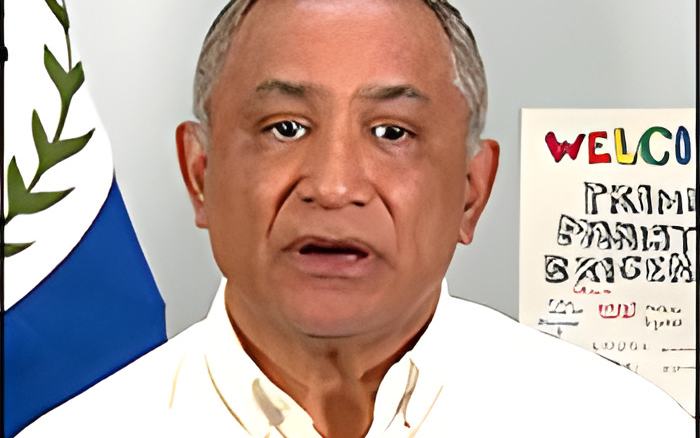
Abner Andre Perez - Minister of the Blue Economy & Civil Aviation

"That issue that you're raising on Cayo Rosario highlights - is a clear example of what is done haphazardly when you don't have, when you don't have a marine spatial plan when you don't have a Blue Economy Plan."
"This Cayo Rosario Project has been carrying [on] for years, and we inherited its legal implications that as a government, the investor does not see who was in power or not. They just saw one Belize Government. So, when you look at all of this documentation that was hurriedly done before the change of government, we are faced with these papers there that need to be renewed, and if we don't renew them, we have legal implications there. They can take us to court, and let me tell you. Our government is tired of litigation."
Over the years, the developers have taken a lot of heat from the conservation-minded residents of San Pedro, who won't entertain the idea of the potential destruction of marine habitat with so much eco-tourism potential. And, of course, it's located inside the Hot Chan Marine Reserve.
For that reason alone, the project's biggest and most frustrated island critics have been demanding that the government explain.
Why… would any administration allow a private investor to acquire ownership of this beloved island, which is inside a conservation zone?
That passion is probably why CEO Kennedy Carrillo acknowledged their deep love and respect for the environment.

Kennedy Carrillo - CEO, Ministry of the Blue Economy & Civil Aviation
"San Pedro, a community built by devout, traditional fishermen and women, who today, are also the movers and shakers of the country's most vibrant tourism destination, a community that guards its natural blue heritage zealously, but also over years, has mastered the art of exploiting it sustainably."
That continuous pursuit of sustainable resource management helped to give birth to two policy documents: the Belize Blue Economy Policy and Strategy and the Belize Maritime Economy Plan. The Ministry and the crafters of this document say that they are rule books that encompass the bigger picture of all of Belize's marine environment.
Abner Andre Perez - Minister of the Blue Economy & Civil Aviation
"Whenever there are further investments like this can be carefully weighed out and carefully studied, and also, we have guidelines that we need to do it."

Maxine Monsanto - Blue Economy Director, Ministry of the Blue Economy
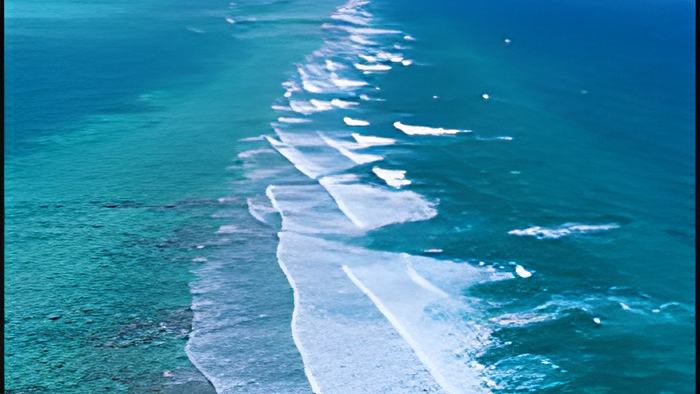
"The intention of the Policy and Strategy and the Belize Maritime Economy Plan and the accompanying strategic implementation plan, which will be included in your package, is intended not just to guide the Ministry of the Blue Economy and Civil Aviation but it's to provide a blueprint, a pathway that other industries, other sectors, other ministries - such as tourism - and others can use to see the direction we want to go to. As the PM said, the Ministry is not taking over. Instead, what the Blue Economy Unit intends to do is assist in facilitation, coordination, collaboration, and cooperation between all the ministries, supporting economic development, and supporting the Ministry of Economic Development. But, our focus will specifically be Belize's blue space. Just to be clear, that's the coastal zone, the coast, the barrier reef, the corals, the islands, our internal waters, and our territorial seas ending up in our EEZ."
Jane Salazar McLoughlin - Senior Blue Economy Officer, Blue Economy Unit

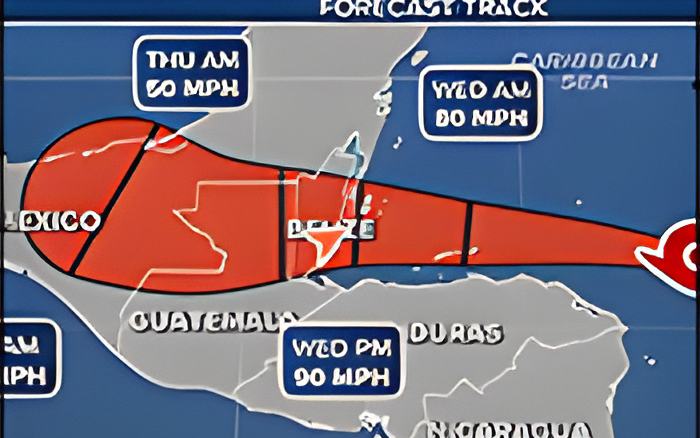
"So, what is the Maritime Economy Plan? The Maritime Economy Plan sets up all the sectors that operate with Belize's Blue Spaces. Again, as has been stated earlier, the Belize blue space encompasses our inner lagoon, territorial seas, and exclusive economic zones. These sectors include our bedrock sectors, so to speak: coastal development, fisheries, tourism, and shipping and ports. Our emerging potential for and to grow our Blue Economy, these sectors include - again - tourism by advancing our tourism practices, energy - specifically marine renewable energy - as a small island state, with the potential to pilot and prove that we can move away from our dependence on fossil fuels, and ecosystem services. As we are here today, the storm, Lisa, approaches Belize. Our Mangroves, coral reefs, and seagrass will help us to make sure that Belize will not suffer damages that could be worse when this hurricane - apologies, when this Storm, please not a hurricane - makes landfall potentially on Wednesday. These ecosystem services are integral to the growth of all our blue economic activities."
So, while that's the overview for these two documents, the Blue Economy Ministry may run into heavy resistance from Belizeans who don't take kindly to restrictions on freedoms they already enjoy or diminishes their take-home salaries.
For example, there is fisherfolk like the Sarteneja Community, who condemned the implementation of the fisheries regulation that lobster tails can't be smaller than 4.5 ounces.
That's part of the government's attempt to protect an important marine resource from eventually disappearing from Belizean territorial waters. Those regulations are supposed to come into effect next year; under the Blue Economy Development Policy, and Strategy and the Belize Economy Plan, Sarteneja's artisanal fishing practices may be monetized by turning their fishing trips into eco-tourism opportunities.
Alternatives like that then reduce the overfishing pressures on this marine resource without harming the livelihood of the Sarteneja fishers.
Abner Andre Perez - Minister of the Blue Economy & Civil Aviation
"The traditional fisherfolk of Sarteneja and Copperbank, we consider artisanal fisherfolk. They have been doing it for generations, but we're saying, from the Blue Economy aspect, our fisherfolk from Sarteneja and Copperbank are telling us that they have to go further and further out [at sea] to get their products. It's costing them more - fuel, the rising fuel costs. And they're saying that they're being left out. They're saying that they're being marginalized. I was at the meeting there. It was very robust. They were very vocal about it, and I listened very carefully. So, what - from the Blue Economy standpoint - we're saying is that we need to go back to our people, but they need to come along with us. It's not only from the aspect of government or the ministry but rather, it's to have a collaborative effort to bring them on board. You have value in what you have right now. It's about time that we tie it in with tourism, giving an example of taking you and teaching you that there is more value to taking a three or four-day fishing [trip], taking tourists, and showing them how you traditionally fish. That has value, and you're going to make more money. At the same time, you're making use of our space because the artisanal fisherfolk of Sarteneja and Copperbank are the only ones in the entire Caribbean who fish that way. We can tie it in to showcase it with tourism. That is another market as well that can come."
The Belize Blue Economy Policy and Strategy and the Belize Maritime Economy Plan will be closely harmonized with the Belize Marine Spatial Plan, which is currently in the stakeholder consultations phase. All three will be necessary for Belize's careful management of its sea spaces.