
Another organization that's keeping a very close eye on those shelters is the Belize City Council's City Emergency Management Organization, or CEMO for short.
They are the City Hall's local-government equivalent of NEMO, and they are responsible for keeping residents of Belize City safe during the storm. But, as the country's largest population center, that's not an easy task.
We stopped by today to talk with the Deputy Mayor about their level of preparedness:
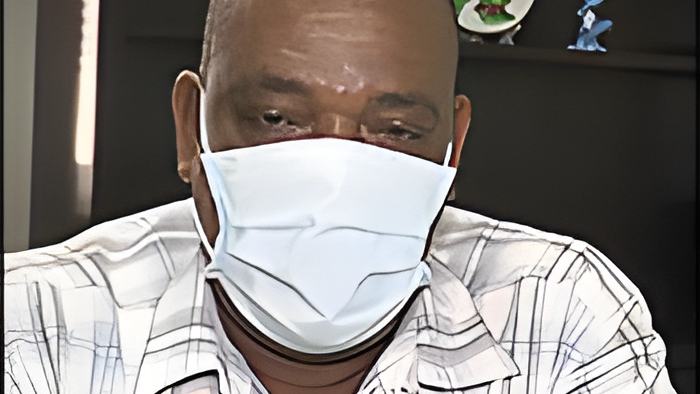
Michael "Chips" Noralez - Deputy Mayor, CEMO
"Since Sunday, we had put all of our 13 committees on alert. After an advisory from the National Met Service, and the National Emergency Management Organization (NEMO), we decided that we will make sure that our city people - since we are responsible for the city - will be well-informed during this time of emergency. Since yesterday at 4, we've put our EOC in action. I think when you passed there a while ago, you saw some of the members. People from the BDF are there, the Port Authority, police, they are already there. They are just gearing up and making sure that whenever the next advisory comes out, we'll be on hand."
"We have our education committee, public information committee, making sure that we put out advisories as quickly as possible. As soon as we get them from NEMO and the Met Service, we deal with it as quickly as possible. On the ground, we have the CEMO Liason Officer, who is Miss Mel Dawson, who is coordinating with all the other stakeholders, Red Cross, NEMO, Port Authority. You have a committee that will have to kick into high gear."
Reporter
"What's the plan for aid for - let's say, for example, you have the flood-prone areas of the city, and those parts get inundated."
Michael "Chips" Noralez
"Even before the storm hits, we encourage those people to leave the area. We provide buses, and the buses will be announced when they will be out there. All that we're asking is that the people cooperate with us, and move on a timely basis to get you to shelters. Now, within those communities, we have some flood-prone areas like the Jane Usher area, certain parts of Collet as well, and Lake Independence. The Red Cross, along with us and NEMO, we trained people who live in those areas. So, they know exactly who gets inundated first. So, we advise people through them. Let's move. They are called CDRTs, community disaster response teams, so a bunch of people who know exactly what will happen in their area. So, we advise them, okay, it's time to move. We should be moving at a certain time. They get the people ready, and then, when NEMO declares shelters open, then we become the first responders, and we man the shelters for a time until the public service is ready to take over from us."
As you've been hearing, the hurricane shelter experience this year will feature strict COVID-19 protocols, which everyone seeking sanctuary will need to abide by. We asked the Deputy Mayor about those additional procedures, and he said that Belizeans ought to be very familiar with how they work by now:
Michael "Chips" Noralez - Deputy Mayor, CEMO
"A few days ago, we had a walkthrough at one of the designated shelters, where we had to deal with how people should enter. The first thing they do is wash your hands. If you don't have any water, well, we use hand sanitizer. Then, your temperature is taken, and then, you're shown a room. Now, if in the event you have a high temperature, or you're showing signs of COVID, some flu, or something like that, then you're put into a different room. And then, we notify the medical authority. They would know what to do from there."
"In the shelters, we space people out. We - can I say demand, or we encourage them to please bring their masks, bring their sanitizers with them, as much as possible. Bring your medication, whatsoever it is that you know that you need it. Bring it along because we need to make sure that you are okay there until we have attended to everybody. Then, we could start making sure that everybody is alright. But, they can help us by putting their family plan in place, and following the protocols. We more or less know what the protocols for COVID-19 are. So, just follow them, social distance, wear a mask, and sanitize as often as possible."
NEMO has compiled a list of all available hurricane shelters countrywide, which you can find at their website, site.nemo.org.bz/national-shelter-list.