
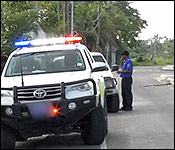
In other news, January was a month of grieving for the lives of all those lost in fatal car accidents. Whether it was a cop who crashed on a motorcycle, a man flung out of the pan of a truck, or a little boy killed when the car he was in flipped over.
It was because of the high number of traffic incidents that the Road Safety Project was started. This included capacity training and even equipment donations - including breathalyzers and speed guns.
But, think about it - the last time you were on the highway, did you see any of these in use? We centrally haven't and we have teams on different roads at least three to four times per week. That's why we wanted to know where the most recent donation has been over the last year and a half.
Courtney Menzies has this story.
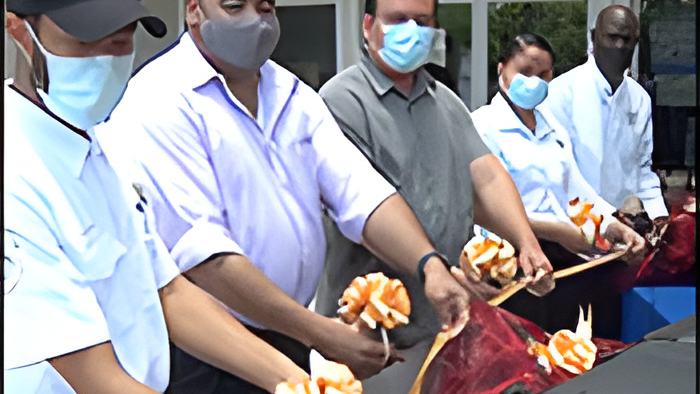
In July 2021, the Department of Transport - and by extension law-abiding drivers who frequent the highways - were filled with renewed hope when they received a donation of speed guns and breathalyzers.
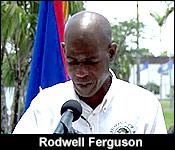
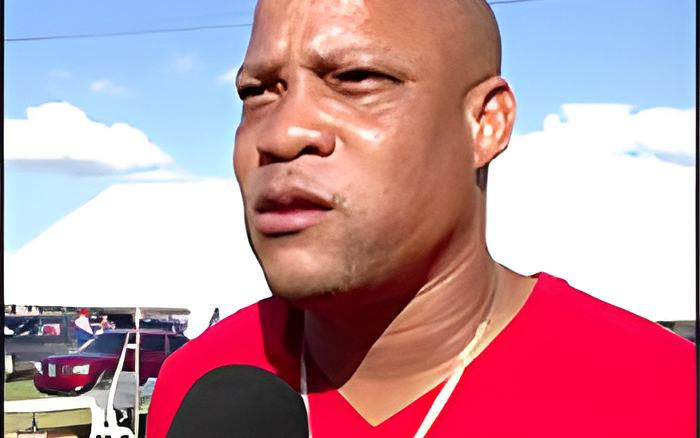
Rodwell Ferguson, Minister of Transport
"Every year, a large number of incidents occur on the highways and roads due to drunk driving. These irresponsible drivers who drink and drive put their lives as well as other lives in tremendous risk. Our officers use breathalyzers to check persons suspected of being under the influence of alcohol, with the hope of preventing any road traffic collisions."
Dian Vasquez, Chief Transport Officer
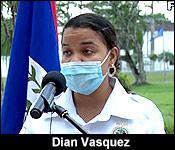
"It is important to join worldwide efforts that contribute to saving lives from collisions. These efforts are captured through partnerships such as this one with the Caribbean Development Bank via the Road Safety Project, which builds an institutional capacity in conjunction with the provisions of resources to carry out the tasks necessary to save lives from road traffic collisions. Resources like the 16 radar speed guns and 26 breathalyzers that the department of transport is receiving today."
But it's not the first time the department has received a donation like this. In 2014, the Ministry of Finance was planning to purchase breathalyzers, and the transport officers even underwent training to be able to use them properly.
And in 2019, private citizen Christopher Coye donated 10 breathalyzers to the police department.
But yet, Belize's roads still aren't safe, and every year, dozens of residents lose their lives in traffic accidents. In January alone, there have been close to ten - if not more - deaths that occurred as a result of traffic accidents, including a police officer, and a 4-year-old boy.
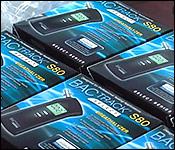
And our sources tell us that those brand spanking new breathalyzers and speed guns aren't even being utilized on the roads. According to reports, these pictures show the equipment sitting inside their cases on the shelves at the department.
But on Friday when we asked the Minister of Transport about it, he insisted that, yes, they're being used.
Rodwell Ferguson, Minister of Transport
"When you do your homework properly, then I could answer your questions. The breathalyzers are in use as we speak. Just recently, there was an issue in Orange Walk and they checked the person, he was under the influence, but they made sure the breathalyzers were being used."
Courtney Menzies:
"How many of them are in use right now, it's all of them or just some?"
Rodwell Ferguson, Minister of Transport
"All of them."
Reporter:
"And are they receiving trainings, capacity building trainings."
They are already receiving training, actually some of them went out of the country for training.
Courtney Menzies:
"And can the breathalyzers be used in court, I don't know if there's a stipulation in the law that allows that."
Rodwell Ferguson, Minister of Transport
"In 1996 the law was passed that breathalyzers in the country were legal, so they can be used in court."
But yet, in 2019, the commissioner of police said the opposite. He had explained that the only samples admissible in court were blood or urine.
Chester Williams, Commissioner of Police
"There is an SI that speaks to the use of breathalyzers but the evidence that is acceptable in a court of law currently for driving motor vehicle with alcohol concentration above the prescribed limit is governed by the intoxicating, the issue as it relates to… the test must be done either through blood or urine sample, right? And so, it requires a analysis to be done by the National Forensic Service of either the blood or urine and it is based on the alcohol level that the court determines whether or not a person is legally drunk and not by what a breathalyzer would read so while yes you do have the legislation, the SI that deals with the breathalyzers, we would want to see that we change the law that the evidence to be accepted for the court to find you guilty of drunk driving would be the use of breathalyzer rather then having to go through the process of asking for a blood or urine sample then go to the lab for testing and these sort of things."
So while their results can't be used in court, they can, however, be used to check and detain drivers that are under the influence.
And as for the speed guns well, despite our news teams' constant travels on the road, we haven't really seen them around.
So, we're still unsure if this donation - costing hundreds of thousands of dollars, and funded through the CDB - is actually in use, and whether the Road Safety Project will be able to complete it's goal of zero deaths on the road by 2030.
We also reached out to the Chief Transport Officer, Dian Vasquez, but she has not responded.