Should the government have called a referendum when it went to the House of Representatives with a package of constitutional amendments in May? Well that’s what a small group of decidedly pro-opposition citizens held and they went to the Supreme Court on May ninth, asking the Chief Justice to stop the government from putting into law an amendment to the Referendum Act. That amendment takes out the section which said that government must hold a referendum when it seeks to alter fundamental rights and freedoms guaranteed to a citizen by the constitution.
The UDP government took it out because they felt that section of the law had no binding power. And that’s because all the procedures and requirements for amending the constitution are contained within that same constitution. But according to the attorney for this citizens group, former PUP Minister Lisa Shoman, the government was obligated by law to hold a referendum to let citizens register their opinions on the package of amendments.
The Chief Justice agreed to judicial review and granted Shoman an injunction against government barring them from signing the referendum amendments bill into law. That’s the case that was argued before the Chief Justice on June 30th when Shoman asked for two declarations: the first that the Prime Minister has acted unlawfully by failing to initiate a referendum along with his package of constitutional amendments and the second asking the court to order the prime minister to hold a referendum.
It’s a cute matter, because the Chief Justice as head of the judiciary strictly cannot interfere in the work of the legislature – which has approved the amendment to the Referendum Act and is expected to approve the constitutional amendments, making them law. In a carefully worded judgment that took an hour and a half to deliver, the Chief Justice did not grant either of the declarations, but critically, he did state that the constitutional amendments should be put to a referendum.
The CJ was short and details, only suggesting that such a referendum would have to come after the legislature is finished with the passage of the amendments. And he took it no further, closing with the Delphic declaration that, “the court is confident that a writ of referendum will ensue.” The Chief Justice also discharged the injunction which means that the Referendum Amendment Act – which was approved two months ago - can now be signed into law.
Overall, it is a mixed bag, because it doesn’t order the government to do anything but states clearly what the court expects them to do – which is, hold a referendum. Still, it doesn’t say anything about how that would work within the legislative process. Still, for attorney Lisa Shoman it is a victory.
Lisa Shoman, Attorney for Applicant
“I think it is a vindication of the citizens’ rights to be consulted in the issue and the Chief Justice said very clearly that only is the section 22a of the Referendum Act not unconstitutional, he went even further and stated that the citizen had the right to expect that a referendum would be held in so far as sections 5 and 14th of the 6th Amendment Act is concerned. He has also said that he granted the relief but however he believes that the Prime

Minister does not have to call this referendum until the 90 days has passed. Now that is the Chief Justice’s ruling and obviously it must be respected. I would like to point out however that nothing prevents the Prime Minister in fact from calling the referendum at any time before then.
Every single citizen in Belize has the right to expect that the Prime Minister will respect the ruling of the court, myself included.”
Jules Vasquez,
But the ruling is an expectation.
Lisa Shoman,
“The ruling is an expectation and that is the language that the court uses. I hardly see any Prime Minister going against such a ruling. I really don’t.”
Jules Vasquez,
He expects a referendum will be held soon.
Lois Young, Attorney for Government
“Well I don’t know. I will consult with my client and see what they have to say.”
Jules Vasquez,
Will the government appeal?
Lois Young,
“I am going to consult. The judgement was difficult to understand. I have to go and read it.”
Lisa Shoman,
“I would like to take the opportunity as a citizen to call on the Prime Minister to preserve the right of the citizen and I will go even further, and I think Mr. Sylvester will concur with me, that perhaps the time has come for us to include this into the 6th Constitutional Amendment Bill and to make referendum and citizen referendums, especially when it comes to fundamental rights and freedoms, to make that a part of our constitution as occurs in other places.”
Jules Vasquez,
I think the argument is why did not the
government which you were a part of, why did not they do that?
Lisa Shoman,
“Well I don’t think that is a valid question Jules because we deal in the present, not in the past.”
Jules Vasquez,
There isn’t anything to stop the government from passing the amendment.
Lois Young,
“That’s correct.”
Jules Vasquez,
It is just his expectation.
Lois Young,
“Yes. That is what I think has come out of the judgement but I have to go and consult and I have to read it as to whether we are going to leave that expectation unchallenged.”
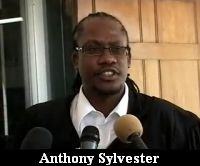
Anthony Sylvester, Attorney for Applicant
“I feel that we had to go through the court system to actually be vindicated. We were called all kinds of names, we’ve taken all sort of cheap shots at, but at the end of the day a court of law declared that the citizens of Belize have a right to be heard and make their pronouncements on the amendment to their constitutional rights and freedoms and I think that is a wonderful thing and a good day for us.”
Government was ordered to pay the other side’s costs of $10,000 and that’s probably the most attention they will be paying to the judgment.