
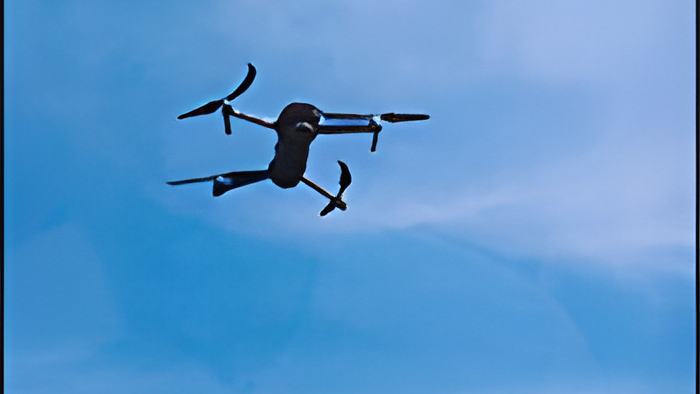

Drone operators got to sound off today on the Ministry of Civil Aviation's first unmanned aerial systems public consultation.
The draft regulations seek to bring drones under a strict regulatory regime, which has some users questioning the future of unmanned flight in Belize. Jomarie Lanza was at the event and here's her report.
Whether you are flying high powered, micro or camera drones, today's Unmanned Aerial Systems Public Consultation was a landmark event for the future of drone operation and regulation in Belize. It was good turnout at the SCA Auditorium with robust presentations from as many as 50 stakeholders.
Yesterday the president of the UAS Industry Association who told us that their members had a number of concerns with the draft regulations. Today they were able to voice their concerns and find common ground on how to move forward with the draft.
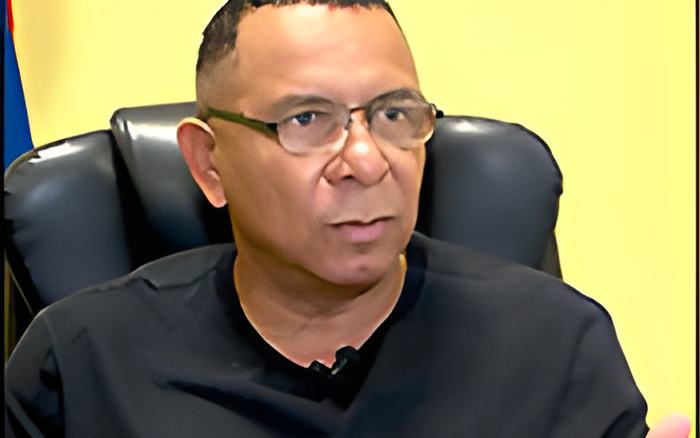
Nigel Carter, Director of Civil Aviation

"So we put out a drone operational directive last year the operational directive is in intended to regularize the use of drones in Belize it sets out requirements for registration of drones the registration of drone operators, guidelines for general operations where you can and cannot use it, incident reporting if there is any incidents with those drones and so forth, the session today was intended to listen to our stakeholders and basically respond to their concerns the intent is to compile the information that we have, that we got today as well as information that we had previously gotten Via email submission, analyze those and then make changes where necessary, during the event I had mentioned that we are going to listen to our stakeholders where we can make certain changes, we will make those changes. However where we cant make those changes we will explain to those stakeholders why we cannot make those changes. The purpose of the rule is two fold, one, we need to protect society, we need to protect not just the operators of drones or those persons in aircraft but also the general public. We have to look at privacy of persons, we have to look at safety of persons operating a drone inside of a concert for instance there needs to be guidelines on how that is done, otherwise somebody can get hurt. And the government of Belize needs to be responsible. We need to ensure that we can protect all those concert goers we need to protect those persons inside of airplanes, we need to protect those persons that are in their own homes from any breach of privacy or any unsafe situation that may occur to them."
We saw attendees from the ministry of agriculture, BEL, Coast Guard, and a handful of farmers and videographers present at the consultation. But they all voiced similar concerns the need for a safe airspace to operate and a regulation that is easy for them to understand.
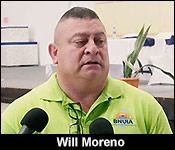
Will Moreno, President, Belize National UAS Industry association
"I do believe today's consultation was good we noticed that there was a change in tone from the very first time we were sending communication back and forth that is what we have been advocating for, for us to be heard as drone pilots because what was happening at first was that all drone pilots wrestled doing individual documents to the Belize Department of Civil Aviation and nobody was getting a response so what we did was we unified the group and I think with that they realized how important it is that we do want safe airspace and that is basically what we are trying to push. We want safe airspace we just don't want the regulations to be so wordy or legally verbose to the point that it is not understandable for just any person that wants to operate like in a hobby capacity it needs to be something where it is easy to understand and a lot of other countries even go into diagrams to be able to show what they are looking for."
And in terms of what the current registration laws are, anything over 250 grams is required to be registered; if it is under 250 grams with a camera required it must also be registered.
Nigel Carter, Director of Civil Aviation
"Again it's a $30 fee for registration just a bout the same for the operating license but your drone would have already costed you a thousand dollars right so $60 for you to have that type of equipment, I don't want to say it is a far stretch owning a drone nowadays for now it is used for work but for the recreational user it is still more a luxury as opposed to a necessity."
"We are going to allow for an extra 2 weeks for people to send in their comments we want structured comments as opposed to comments that are just I don't like it because I don't like it right? So please give us structured comments we want to know what article of the operational directive is your pay in point we want to know the rational for why you say it is a payin point we would like to hear your recommendations for resolving it that will allow us to study and analyze it and then you know come up with a good solution, for now we believe we have enough information again we have an extra 2 weeks for you to submit any other concerns in writing to us and then the expectation there about for us to put out a report with decisions that should have been made by then."
The consultation was robust - it lasted four hours.